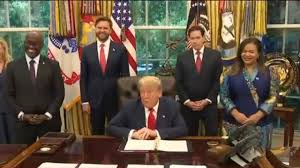


The presidents of the Democratic Republic of Congo (DR Congo) and Rwanda are expected to sign a U.S.-brokered peace agreement in Washington, in a bid to end the long-running conflict engulfing eastern DR Congo. The summit, hosted by U.S. President Donald Trump, takes place amid a sharp escalation in clashes between Congolese forces and the M23 rebel group, which Kinshasa says is backed by Rwanda.
DR Congo’s military has accused M23 of trying to “sabotage” the peace process, while the rebels claim the army violated a ceasefire by launching fresh offensives. Earlier this year, M23 seized large swathes of territory in the east, killing thousands and displacing many more.
Presidents Félix Tshisekedi and Paul Kagame have spent years trading accusations over responsibility for the conflict. A preliminary peace accord was signed by their foreign ministers in June, which Trump hailed as a “glorious triumph,” and the two leaders are now set to formally endorse it alongside dignitaries from Burundi, Qatar, and other nations.
The M23 rebels will not attend the Washington ceremony; instead, they remain engaged in separate negotiations with the Congolese government under Qatar’s mediation. The U.S. has played a central role in pushing the two neighbours toward reconciliation, hoping peace in the mineral-rich region will unlock opportunities for increased American investment.
Despite Kigali’s continued denial, UN experts say Rwanda’s military maintains “de facto control” over M23 operations. Analysts remain sceptical that the new agreement will bring lasting stability. Bram Verelst of the Institute for Security Studies told the BBC that there is “currently no ceasefire in place” and that M23 continues to expand and consolidate its hold on strategic areas, including Goma and Bukavu.
Fresh fighting erupted this week as DR Congo’s army accused the rebels allegedly backed by Burundian troops of attacking villages in South Kivu. M23, however, claims the Congolese military launched coordinated air and ground strikes on its positions. Burundi, which has deployed thousands of troops to assist DR Congo, has yet to respond to the accusations.
Rwanda, for its part, says it has taken “defensive measures” in eastern DR Congo due to threats posed by the FDLR, a militia containing remnants of the perpetrators of the 1994 genocide. Disarming the FDLR and withdrawing Rwandan troops from Congolese territory are key provisions of the peace deal. However, previous agreements have collapsed over disagreements tied to these same conditions.
The Congolese government is also demanding that M23 vacate territories it has captured something the rebels have refused to do in the Qatar-led talks. Qatar and the U.S. are jointly coordinating diplomatic efforts, with Qatar maintaining close ties to Rwanda and Washington aligned more closely with Kinshasa.
The U.S. State Department estimates DR Congo holds around $25 trillion in mineral reserves, including cobalt, copper, lithium, manganese, and tantalum critical resources for electronics, electric vehicles, renewable energy systems, and modern military technology. Trump has said the U.S. stands to gain significant mineral rights as part of the broader peace and economic cooperation framework.
Political scientist Jason Stearns told reporters that Washington envisions a regional economic pact involving joint development of mining, hydropower, and infrastructure. Still, he noted that DR Congo insists no such cooperation will move forward until Rwanda fully withdraws its troops from its territory.