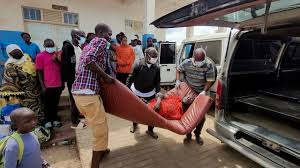


The World Health Organization (WHO) has declared the Ebola outbreak affecting the Democratic Republic of Congo (DRC) and neighbouring Uganda an international public health emergency, raising concerns over the virus’s rapid spread across borders.
While the WHO stopped short of classifying the situation as a pandemic emergency the highest alert level introduced in 2024 officials warned that the full extent of infections remains uncertain. Countries sharing borders with the DRC are considered at high risk of further transmission.
According to the Africa Centres for Disease Control and Prevention, at least 88 people have died and 336 suspected cases have been recorded so far. The outbreak is linked to the Bundibugyo strain of Ebola, first identified in 2007, which has now also claimed the life of a Congolese national in Uganda.
Medical charity Doctors Without Borders (MSF) described the situation as “extremely concerning” and said it was preparing a large scale emergency response.
DRC Health Minister Samuel-Roger Kamba warned that the Bundibugyo strain currently has no approved vaccine or specific treatment. He noted that the virus can have a fatality rate of up to 50 percent and stressed the importance of early medical care.
Existing Ebola vaccines are only effective against the Zaire strain, discovered in 1976, which carries an even higher fatality rate of between 60 and 90 percent.
Health authorities confirmed the latest outbreak on Friday in the DRC’s north eastern Ituri province, which borders both Uganda and South Sudan. Symptoms of Ebola include fever, vomiting, and severe bleeding.
MSF Emergency Programme Manager Trish Newport said the rising number of infections and deaths in a short period, combined with cross-border spread, was deeply worrying.
This marks the 17th Ebola outbreak in the DRC. Officials fear the disease could spread further across the region due to heavy cross-border movement linked to mining and trade activities.
The WHO warned that the high rate of positive test results and increasing reports of suspected infections suggest the outbreak may be significantly larger than currently reported. It has urged countries to strengthen emergency response systems and introduce health screenings at borders and key transport routes.
Ebola is a severe viral disease believed to originate in bats and spreads through direct contact with infected bodily fluids. The virus can cause organ failure and internal bleeding, with an incubation period of up to 21 days.