

Residents of Kampala have voiced growing concern after health officials confirmed an Ebola related death in the Ugandan capital, raising fears over the spread of a new outbreak that began in neighbouring Democratic Republic of the Congo.
Authorities announced on Friday that a Congolese man who died earlier in the week at Kibuli Muslim Hospital had tested positive for the deadly virus.
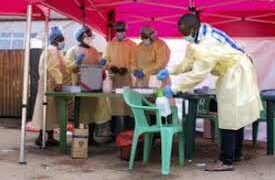
On Saturday, strict precautionary measures were visible at the hospital, where visitors underwent temperature checks using infrared thermometers and were required to sanitise their hands before entering the facility.
The news has sparked anxiety among local residents. Kampala resident Francis Anguzu said the reports left him deeply worried.
“When I heard there was a suspected Ebola case, I became frightened,” he said. “Ebola is not a simple disease. It is deadly and its effects are severe.”
Ebola is a highly contagious viral illness that can cause severe bleeding, organ failure, and death.
Another resident, Ismail Kigongo, said memories of losing his father to a similar disease heightened his fears.
“I lost my father to a disease like Ebola or COVID, so hearing this scares me,” he explained. “I still remember burying him without even seeing his body.”
The Africa Centres for Disease Control and Prevention reported on Saturday that more than 80 people have died and over 300 suspected infections have been identified since the outbreak began.
The outbreak was first confirmed earlier this week in the north eastern Ituri Province, a region bordering Uganda and South Sudan.
On Sunday, the World Health Organization declared the outbreak a public health emergency of international concern.
Health experts say the current epidemic involves the rare Bundibugyo strain of Ebola, for which there is currently no approved vaccine or specific treatment. The strain is known for its high fatality rate.
Medical teams in both Uganda and Congo are intensifying border screenings, contact tracing, and emergency response measures to prevent the disease from spreading further across the region.
The WHO has urged countries to activate emergency response systems and strengthen health checks at border crossings and major transport routes.
Scientists believe Ebola originated in bats and spreads through direct contact with infected bodily fluids. The virus can rapidly lead to severe internal bleeding and multiple organ failure.