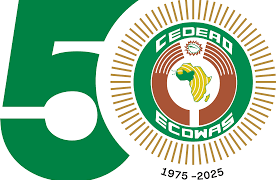


Fifty years ago, on May 28, 1975, fifteen countries in West Africa came together to form the Economic Community of West African States (ECOWAS).
The initial leadership was entrusted to William Tubman, the former president of Liberia.
The establishment of this union was significantly influenced by the efforts and calls for unity from Togolese president Gnassingbé Eyadéma and former Nigerian leader Yakubu Gowon, which led to its implementation in West Africa.
Both leaders traveled throughout the region, culminating in the signing of the ECOWAS treaty in Lagos in 1975 by fifteen nations.
The purpose of the Lagos treaty was to facilitate the free movement of goods and individuals within the region. In 1990, they eliminated the requirement for personal identification cards when crossing borders.
Despite its successes, the path has not been without challenges. Last year, the tri-nation bloc of Mali, Burkina Faso, and Niger declared their departure from the regional organization known as ECOWAS.
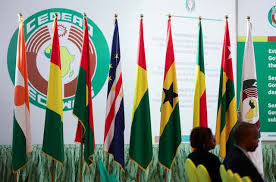
They subsequently established their own security alliance, called the Alliance of Sahel States, cut military ties with long-standing Western allies such as the U.S. and France, and sought military assistance from Russia.
In reaction, the bloc set forth transitional guidelines, upholding policies such as free trade and visa-free travel, at least for the time being.
Currently, member states are preparing to finalize these measures and decide on the subsequent actions. Tensions have escalated following the decision by the three countries, now members of the Alliance of Sahel States, to implement a 0.5 percent import duty on ECOWAS goods — a decision that undermines the region’s free trade goals and further complicates relations.
As talks progress in Accra, ECOWAS is confronted with the task of reestablishing its relationships with the secessionist nations, all while maintaining stability and collaboration throughout West Africa.