On Tuesday, Ugandan lawmakers approved a government-supported bill that permits civilian trials in military courts, despite significant backlash from opposition leaders and critics who view it as a regressive move.
This controversial legislation was proposed earlier this year following a Supreme Court decision that stated civilians cannot be tried by military courts, raising concerns about the ability of untrained military personnel to administer justice.
According to the bill, civilians may face court-martial if their alleged crimes are connected to individuals subject to military law, and it mandates that presiding officers possess legal qualifications.
However, opposition leaders, human rights advocates, and others argue that this legislation undermines democracy as Uganda approaches its 2026 elections.
Amnesty International has cautioned that military courts could further entrench repression in the lead-up to the elections. Some opposition members exited the parliamentary chamber in protest before the bill’s passage, claiming it was unconstitutional.
The legislation is seen as an attempt to unlawfully extend judicial authority typically reserved for higher courts to military courts, which are meant to address only military disciplinary matters, according to the Uganda-based rights organization Chapter Four.
President Yoweri Museveni, who has been in power since 1986, is anticipated to sign the bill shortly.
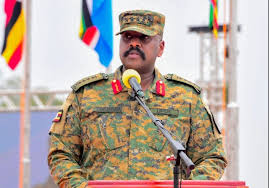
The president, along with his son and army commander Gen. Muhoozi Kainerugaba, criticized the Supreme Court’s ruling that effectively abolished court-martials.
Following this decision, government officials-initiated efforts to propose legislation aimed at maintaining the operation of military courts.
Museveni remarked in a statement after the ruling that ‘the country is not governed by the judges.’ He is anticipated to seek re-election in the upcoming January 2026 polls.
Many Ugandans foresee a potentially tumultuous political transition, as the 80-year-old Museveni lacks a clear successor within the ruling National Resistance Movement party.
Some analysts express concerns that he might eventually step down in favor of Kainerugaba, potentially through a non-violent coup, as Kainerugaba has expressed his desire to follow in his father’s footsteps as president.