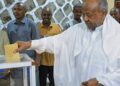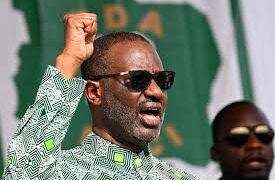


The primary opposition leader in Ivory Coast has announced his resignation as the head of the party but will continue to spearhead efforts to secure victory in the upcoming election, following his disqualification from the presidential race scheduled for October.
In a statement shared on social media on Monday, Thiam expressed, ‘In the best interest of the party, I have chosen to hand over my leadership role to you, the activists.’
He emphasized that this decision does not alter his commitment made in December 2023 to lead the party towards success in the October 2025 elections.
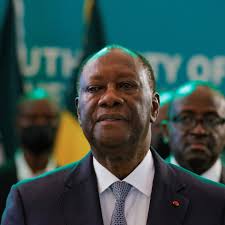
Meanwhile, President Alassane Ouattara, who has been in power since 2011 and is currently 83 years old, has not yet confirmed his intentions regarding another candidacy, although he has expressed a desire to ‘continue serving my country.’
Thiam’s presidential campaign has faced challenges related to his nationality, as candidates are prohibited from holding dual citizenship. Born in Ivory Coast, Thiam renounced his French citizenship in March to pursue his presidential ambitions.
However, a court in Abidjan removed him from the electoral list last month, ruling that he had forfeited his Ivorian nationality upon acquiring French citizenship in 1987.
Thiam is currently involved in a legal dispute regarding his election as the leader of the Democratic Party of Ivory Coast–African Democratic Rally (PDCI), following a challenge to his Ivorian nationality by a party member at the time of his selection.
PDCI deputy president Ernest N’Koumo Mobio has taken over the party’s interim leadership after Thiam’s announcement, urging for ‘cohesion, serenity, and discipline’ and convening a party meeting early Monday in response to the pressing political circumstances.
Additionally, three other opposition leaders, including former President Laurent Gbagbo, have been barred from the presidential race due to prior court convictions.
On Monday, Thiam raised concerns about electoral irregularities, stating, ‘While we had the right to expect inclusive, transparent, and peaceful elections, it is evident that the unjustified disqualification of the PDCI candidate is part of a strategy to eliminate the leaders of major opposition parties, ensuring tailored elections and a predetermined victory.’
The authorities consistently deny any political interference in the electoral process, asserting that decisions are made by an independent judiciary.