

Somaliland, the self-declared independent region of Somalia, has officially welcomed its new president following the recent elections, which have bolstered its aspirations for international recognition.
This inauguration took place just one day after Somalia and Ethiopia finalized an agreement in Turkey to initiate “technical talks” concerning a dispute linked to a prior arrangement between Somaliland and Ethiopia.
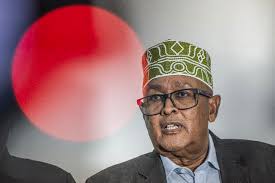
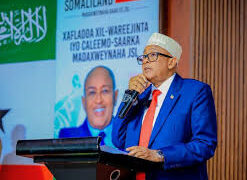
During his inaugural address, Abdullahi, the newly elected sixth president of Somaliland, emphasized the importance of his administration’s mission.
“The primary objective of my new government is to re-establish our relationships with the global community, enabling us to forge a new Somaliland that contributes to the security of the entire region, including the Red Sea.”
Abdullahi, 69, representing the opposition Waddani Party, secured over 50% of the votes in the presidential election held on November 13, defeating the incumbent Bihi, who sought a second term after seven years in office.
The electoral commission confirmed the results, highlighting the high voter turnout and the peaceful conduct of the election as indicators of Somaliland’s democratic resilience.
Richard H. Riley, the U.S. ambassador to Somalia, expressed, “On behalf of the United States of America, President Joseph Biden, and all American citizens, we extend our heartfelt congratulations on this significant occasion today. Additionally, representing the entire diplomatic service corps here in Somaliland, I convey their warmest congratulations as well. You have numerous allies within the international community.”
Somaliland proclaimed its independence from Somalia over three decades ago; however, it has yet to receive recognition as a sovereign state from the African Union, the United Nations, or any other country. Somalia continues to regard Somaliland as part of its territory.
Over the years, Somaliland has been commended for its stable political environment, which sharply contrasts with Somalia’s ongoing struggles with violence, particularly from the al-Qaida-linked militant group al-Shabab. Since 1991, Somaliland has maintained its own government, currency, and security forces.
In its quest for international recognition, Somaliland signed a memorandum of understanding with Ethiopia in January to lease coastal land for a marine base, while Ethiopia would recognize Somaliland’s independence in return, a decision that Somalia argues infringes upon its sovereignty.
This arrangement emerged as a key issue during Somaliland’s electoral campaign, with Abdullahi condemning it for its apparent opacity.
He has committed to reviewing such agreements to guarantee they align with Somaliland’s strategic goals and its quest for international acknowledgment.