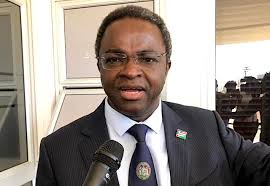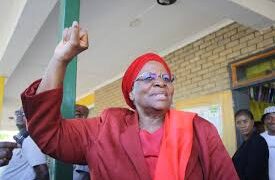


Netumbo Nandi-Ndaitwah, representing the ruling South West Africa People’s Organisation (Swapo), has been elected as Namibia’s first female president following a contentious election last week.
According to the electoral commission, she secured over 57% of the votes, while her nearest competitor, Panduleni Itula, received 26%.
However, due to logistical issues and a three-day extension for voting in certain regions, Itula announced on Saturday that his party would not accept the results, citing allegations of electoral misconduct.
As a result, many opposition parties chose to boycott the announcement of the results on Tuesday evening in Windhoek, as reported by africa24hrs.
“The Namibian nation has voted for peace and stability,” Nandi-Ndaitwah stated, as quoted by Reuters, after the results were revealed.
Swapo has maintained its hold on power in Namibia since the country gained independence in 1990. Nandi-Ndaitwah, a long-standing member of the party and currently serving as vice-president, is regarded as a reliable leader with 25 years of experience in high-level government positions.
Upon taking her oath of office, she will become part of a select group, as Tanzania’s Samia Suluhu Hassan currently stands as Africa’s sole female president.
Itula, a trained dentist representing the Independent Patriots for Change (IPC), is perceived as more charismatic than Nandi-Ndaitwah. In the previous presidential election of 2019, he successfully diminished Swapo’s popularity, causing its vote share to drop from 87% to 56% over the span of five years.
The IPC has announced its intention to “seek justice through the courts” and has urged individuals who believe they were unable to cast their votes due to electoral commission mismanagement to report their experiences to the police.
Swapo, which played a pivotal role in the fight for independence against apartheid South Africa, faced speculation prior to last Wednesday’s general election regarding its potential decline, similar to other liberation parties in the region.
In May, South Africa’s African National Congress lost its outright parliamentary majority, and the Botswana Democratic Party was ousted from power after nearly sixty years in the recent October elections.