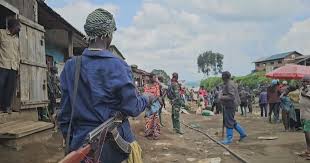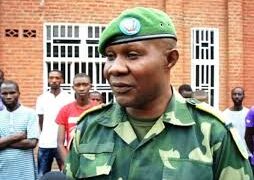


In light of the increasing violence in the eastern regions of the Democratic Republic of Congo (DRC), the Congolese military has reported notable successes against the M23 rebel group. Over the weekend, the military announced that it had effectively repelled M23 forces from South Kivu and regained control of several strategic towns in both North and South Kivu provinces.
Guillaume Ndjike Kaiko, a representative of the Congolese army, confirmed these achievements in a press statement. He highlighted that the military had successfully reclaimed numerous areas that had previously been under M23 control.
“While we are indeed observing the ceasefire, it is important for civilians to understand that whenever the Rwandan army targets our positions or attacks our population or displaced individuals, the armed forces of the Democratic Republic of Congo are entitled to respond.”
Kaiko’s remarks come at a time of heightened tensions in the area, where clashes between the Congolese army and M23 rebels have escalated in recent weeks. The M23, primarily composed of Tutsi fighters, first emerged in 2012 and briefly took control of Goma, a city located near the Rwandan border. The group’s name is derived from a peace agreement signed in March 2009, which M23 alleges the Congolese government has not honored.
After a period of inactivity, the M23 resurfaced in late 2021, rapidly advancing and seizing significant territories in eastern Congo. The United Nations has accused Rwanda of providing support to the M23 rebels, a claim that Rwanda has consistently refuted. In light of the ongoing conflict, Rwandan President Paul Kagame has recently advocated for negotiations between the Congolese government and the M23 rebels, emphasizing the need for a peaceful resolution to the situation.
The allegations made by the United Nations in a report from the previous year indicate that numerous Rwandan soldiers have been engaged in combat alongside M23 forces in eastern Congo. In response, Rwanda has denied these accusations, asserting that its role is limited to providing humanitarian aid to the area and that it is not involved in the hostilities.
As the situation develops, there is growing concern within the international community regarding the humanitarian consequences of the ongoing violence, especially for the hundreds of thousands of displaced individuals affected by the conflict. The government of the Democratic Republic of the Congo (DRC) maintains that its military will persist in safeguarding the nation’s sovereignty and ensuring the protection of its citizens against external threats.