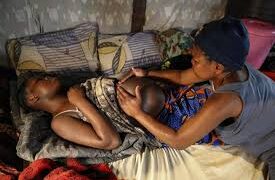


Sara’s experience reflects that of many women in hospitals across the Democratic Republic of Congo, where childbirth can involve not only medical risk but also violence.
Two years after delivering her first child, Sara says she refuses to go through it again. During her labour in Kinshasa, she underwent an episiotomy, but claims the doctor attempted to stitch her without anaesthetic. The ordeal left her deeply traumatised, and she says another pregnancy would force her to relive that experience.
In a country where conservative social norms and strong religious influences shape attitudes toward women and sexuality, such accounts are rarely discussed openly. That began to change after a disturbing video recently spread online, sparking nationwide outrage.
The footage, recorded in a public hospital delivery room in Kinshasa, shows a young woman lying naked on a blood-stained bed, screaming shortly after giving birth. A doctor is seen striking her with a metal instrument and attempting to force her legs apart to continue treatment she appears to resist. When she struggles, he slaps her.
The video triggered swift condemnation from officials. Prime Minister Judith Suminwa called the incident “totally unacceptable,” while First Lady Denise Tshisekedi described the actions as “abhorrent” and demanded accountability.
The case has also drawn attention to broader issues in the country’s healthcare system. According to the World Health Organization, the DRC has a maternal mortality rate of 427 deaths per 100,000 live births—vastly higher than Europe’s rate of 11. The United Nations has warned that shortages of resources and trained personnel are major contributing factors.
In an unusual step, the doctor involved was prosecuted and convicted. He admitted to hitting the patient but argued that she was suffering from postpartum haemorrhage and resisting life saving treatment. He also said he performed the procedure without anaesthetic because none was available. The doctor told the court he had asked for the incident to be filmed to protect himself in case the patient died.
He received a two month suspended sentence for assault and for recording the video, while the state was ordered to pay $2,500 in damages.
Women’s rights advocates say the case highlights a systemic problem. Anny Modi, head of the Afia Mama organisation, says her group supports at least one woman every week who has been traumatised during childbirth. She argues that such violence is often justified under the guise of saving lives and can also be influenced by moral judgment, particularly toward unmarried women.
Health Minister Samuel Roger Kamba has acknowledged that abuse in delivery rooms is a known issue. Meanwhile, Berthier Nsadi said the incident has prompted renewed discussion about improving training for healthcare workers, especially midwives.
The shortage of trained staff remains severe. Estimates suggest there is only one midwife for every 16,000 people in the country far below the level recommended by the World Health Organization.
For many, the viral video has forced a difficult but necessary conversation about the treatment of women during one of the most vulnerable moments of their lives.
- Latest
- Trending