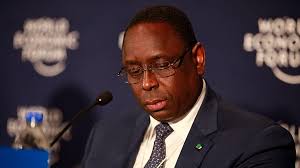


Senegal’s former president Macky Sall is among four candidates being considered this week for the role of Secretary-General of the United Nations, as current chief António Guterres prepares to step down at the end of the year.
The field is notably smaller than in 2016, when 13 candidates competed for the position ultimately won by Guterres. This week, candidates will participate in public question-and-answer sessions with representatives of the UN’s 193 member states.
The lineup begins with former Chilean president Michelle Bachelet, followed by Argentina’s nuclear agency head Rafael Mariano Grossi. On Wednesday, Rebeca Grynspan, head of the UN’s trade and development body, will appear, with Sall concluding the sessions.
A changing global landscape
The smaller pool of candidates reflects a more polarized global environment compared to a decade ago. In 2016, the UN was riding momentum from achievements like the Paris Climate Agreement and a global development agenda. Today, geopolitical tensions have deepened, limiting the organization’s ability to respond effectively to major conflicts.
Divisions among major powers have paralyzed the UN Security Council, preventing decisive action on wars in Ukraine, Gaza, and Iran, among others.
Analysts say this environment has made governments more cautious about putting forward candidates, wary of diplomatic fallout if their nominee underperforms or offends influential nations.
How the selection works
While the UN General Assembly formally appoints the secretary-general, the decisive power lies with the Security Council, particularly its five permanent members the United States, Russia, China, Britain, and France which can veto any candidate.
Traditionally, the role rotates by region. After leaders from Europe, Asia, and Africa including Kofi Annan attention has shifted to Latin America, though Eastern Europe has yet to hold the position.
Candidate backgrounds and nominations
Bachelet, a former UN human rights chief, retains nominations from Brazil and Mexico despite losing backing from her home country. Grossi, head of the International Atomic Energy Agency, was nominated by Argentina. Grynspan, a former Costa Rican vice president, also has her country’s support.
Sall, however, was nominated by Burundi rather than Senegal, and has not received endorsement from either his home country or the African Union.
Calls for a woman leader
With only two women in the race, advocacy groups and several countries continue pushing for the UN’s first female secretary-general. Both Britain and France have expressed support for a woman to lead the organization, while campaign groups argue gender equality at the top remains overdue.