

The United States has announced a significant change in its approach towards three West African countries—Mali, Burkina Faso and Niger where military governments are battling Islamist insurgencies and have cut defence ties with France in favour of closer relations with Russia.
The US State Department said Nick Checker, head of its Bureau of African Affairs, would visit Mali’s capital, Bamako, to express Washington’s “respect for Mali’s sovereignty” and to outline a “new course” in bilateral relations, moving beyond what it described as past policy missteps. The statement added that the US also intends to deepen cooperation with Mali’s allies, Burkina Faso and Niger, on shared security and economic interests.
Notably absent from the announcement was any emphasis on democracy or human rights. Under the Biden administration, military cooperation with the three countries was suspended following a series of coups between 2020 and 2023 that ousted elected civilian leaders. Niger’s former president, Mohamed Bazoum, remains under house arrest.
The statement reflects a policy shift that has become increasingly clear since Donald Trump returned to the White House. One of the first signals came with the closure of USAID operations shortly after his inauguration, followed by a narrowing of US engagement in the region to security concerns and access to strategic minerals, sidelining development and governance issues.
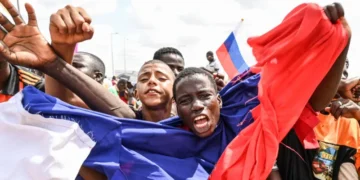
Washington’s explicit recognition of Mali’s sovereignty is expected to resonate strongly in Bamako and allied capitals, where military leaders have boosted their domestic support through pan-African rhetoric and rejection of France’s influence. Burkina Faso’s junta leader, Captain Ibrahim Traoré, has emerged as a prominent symbol of resistance to what he calls “imperialism” and “neo-colonialism,” gaining widespread popularity, particularly among young people.
Senior US officials have made clear that the Trump administration is unconcerned by the abandonment of Western-style democratic models in the Sahel. Last year, Massad Boulos, a senior Africa adviser at the State Department, said the US would not interfere in the internal political choices of other countries, even if democracy was preferred.
This marks a sharp contrast with the Biden era, when the head of US Africa Command (Africom), General Michael Langley, stressed governance and environmental issues as essential alongside military support. Since Trump’s return, the focus has shifted decisively towards counter-terrorism.
US officials have confirmed that Washington continues to support Mali, Burkina Faso and Niger in their fight against jihadist groups, particularly Islamic State affiliates operating in the Sahel, now widely described by analysts as the global epicentre of terrorism. Recent attacks, including one on the airport in Niger’s capital, Niamey, have underlined the scale of the threat.
The insecurity also threatens the region’s valuable mineral resources. Mali is a major gold producer and also mines lithium, while Niger holds significant uranium reserves. Niger’s junta has seized control of its main uranium mine from a French company and is seeking Russian partnership in the sector.
Another factor driving Washington’s shift appears to be a desire not to cede the region entirely to Russian influence. Russia has deployed around 1,000 security contractors in Mali, with smaller forces in Burkina Faso and Niger, amid repeated allegations of human rights abuses.
US officials have signalled they are relatively relaxed about Russia’s military presence, but appear keen to maintain a parallel security partnership of their own. This support is expected to remain limited to intelligence sharing, training and possibly arms supplies, rather than large troop deployments. Washington has ruled out reopening its former drone base in Agadez, Niger, from which it withdrew after being expelled by the junta.
Meanwhile, Mali, Burkina Faso and Niger have withdrawn from the regional bloc Ecowas and formed the Alliance of Sahel States, freeing them from external pressure over governance reforms. Other West African countries, increasingly affected by cross-border militant attacks, are now prioritising practical security cooperation with the three military-led states.
While enhanced intelligence and military support may yield short-term gains against jihadist groups, analysts caution that, as France’s long and costly intervention in the Sahel demonstrated, military force alone cannot restore stability without addressing the region’s deep-rooted social and economic challenges.