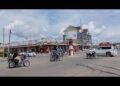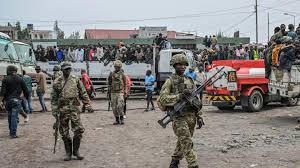


Residents of Uvira in eastern Democratic Republic of the Congo are facing renewed uncertainty after AFC/M23 rebels announced another withdrawal from the city, even as clashes continue in surrounding areas.
In a statement, the armed group said it would hand responsibility for Uvira to the international community, withdraw from all security roles, and called for the deployment of a neutral force to protect civilians and key infrastructure.
The announcement has been met with caution by local residents, many of whom recall similar declarations in the past that were not fully implemented.
“We heard that they are going to leave, but we don’t know if they have really left or if they will leave, because this is not the first time they announce it; this will be the second time,” Mukuninwa Assumani Ruffin told Africanews.
Others fear what may follow if the rebels do pull out. “What worries us here in Uvira is our security,” said Muzingwa Ramazani. “How are we going to live after the M23 leaves?”
Despite the withdrawal announcement, the security situation remains tense. Fighting between M23 fighters and Wazalendo militias has been reported around Uvira. Local sources say the rebels captured the strategic town of Lemera in Uvira territory on Thursday, defying repeated calls for a ceasefire.
Civil society representatives say violence persists in several areas. “They are still fighting, especially in the southern parts of Uvira, in Makobola and other localities, and this worries us,” said Ghislain Baraiga Kabamba. “But if they do withdraw, it will be a good thing.”
Ongoing security concerns
In a letter sent on Thursday to UN Secretary-General António Guterres, the M23 warned of continued security threats. The group’s political coordinator, Corneille Nangaa, pointed to armed actors not party to peace agreements, including the Burundian army, the FDLR, and Wazalendo militias allied with the Congolese army.
Analysts say stronger international oversight is needed. “The American mediation, which obtained the withdrawal of AFC/M23 from the city of Uvira, did not take steps to verify not only the withdrawal of the M23 from Uvira, but also the transitional period,” said Hubert Masomeko, an independent analyst at the Center for Research on Democracy and Development in Africa (CREDDA).
“Security issues related to the city of Uvira were unfortunately not taken into account by the mediation,” he added.
So far, neither the Congolese government nor the UN peacekeeping mission in the DRC, MONUSCO, has officially responded to the latest statements from AFC/M23, leaving civilians uncertain about the future of the peace process and their immediate safety.