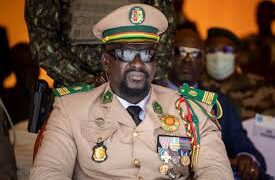


Supporters and critics of Guinea’s military leader took to the streets on Thursday as Gen. Mamadi Doumbouya held his final campaign rally in the capital, Conakry, ahead of Sunday’s presidential election, a vote seen as a critical test of the country’s political future.
Thousands gathered at the Palace of the People, where Doumbouya’s backers praised his leadership and reforms since he seized power in a 2021 military coup. Among them was voter Mariame Kourouma, who said she believes Doumbouya has improved living conditions for ordinary citizens.
“I’m here to support Mamadi Doumbouya because of his kindness, for the job opportunities he gave to people who need them, and for the efforts he has made for the population,” Kourouma said. “That’s why we are here to support him as the president of our country.”
The rally marked the end of campaigning for Guinea’s first presidential election since the coup that toppled former president Alpha Condé, following years of political turmoil and contested constitutional changes. The vote comes at a time of heightened concern about democratic setbacks across West Africa, where several countries have experienced military takeovers or extended transitional rule.
Doumbouya has cultivated strong popular support among citizens who credit his government with launching infrastructure projects, tackling corruption, and promising national renewal. However, the campaign period has also been marked by accusations of repression, with opposition groups alleging restrictions on political freedoms and a systematic sidelining of dissenting voices. Several prominent opposition figures have been barred from running, arrested, or pushed into exile.
One of Doumbouya’s main challengers is Abdoulaye Yero Baldé, a former education minister under ex-president Condé. Baldé’s candidacy has drawn attention from voters opposed to prolonged military rule and constitutional manipulation.
Opposition supporter Mohamed Lamine Bangoura said Baldé earned respect by refusing to back Condé’s controversial bid for a third presidential term. “When Alpha Condé asked Yero Baldé to follow him into a third term, he said no,” Bangoura said. “We told the Guinean people that after two terms, leaders must leave power so democracy can continue.”
Baldé later resigned from government in protest after Condé pushed through constitutional changes that allowed him to secure a third term a decision that sparked widespread unrest and ultimately led to the 2021 coup that removed Condé from office.
Despite Guinea’s significant mineral wealth, more than half of its estimated 15 million people continue to live in poverty, with many facing food insecurity. Doumbouya has centered his campaign on promises of modernization and economic growth, highlighting new roads, public infrastructure projects, and a revised constitution approved in a referendum that was boycotted by much of the opposition.
The ruling junta has repeatedly delayed a return to civilian governance, eventually paving the way for Doumbouya to run for a newly extended seven-year presidential term.
Election authorities say approximately 6.7 million registered voters are expected to cast ballots at more than 24,000 polling stations across the country. Preliminary results are expected within 48 hours, and a second-round runoff is possible if no candidate wins an outright majority.