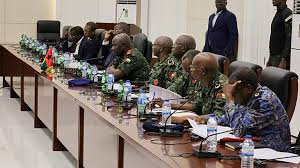


A high-level ECOWAS delegation wrapped up its mediation mission to Guinea-Bissau on Monday without securing a breakthrough, though the West African bloc vowed to resume dialogue with the country’s coup leaders later this month.
The delegation, led by Sierra Leone’s President Julius Maada Bio, traveled to Bissau following last Wednesday’s military coup, seeking a swift restoration of constitutional order. The junta, which has imposed a ban on protests and strikes, insists its takeover was necessary to restore security and stability in the nation.
“We’ve had very fruitful discussions today,” said Sierra Leone’s Foreign Minister Timothy Musa Kabba, speaking on behalf of Bio. “The chair of the authority condemned the coup and called for the immediate reinstatement of constitutional order, including the completion of the electoral process.”
ECOWAS has strongly denounced the coup and demanded the reinstatement of President Umaro Sissoco Embaló, who fled to Brazzaville after being briefly detained. In his absence, the military appointed former army chief Gen. Horta Inta-a to lead a transitional government that has already installed a new cabinet dominated by allies of the ousted president.
Guinea-Bissau’s junta-appointed Foreign Minister João Bernardo Vieira said the military leadership intends to continue engaging with the regional bloc. “The solution to returning to constitutional order is continued collaboration with ECOWAS,” Vieira noted. He added that the one-year transition timeline will be presented to ECOWAS heads of state during their December 14 summit, where next steps will be determined.
ECOWAS suspended Guinea-Bissau from all decision-making bodies a day after the coup, pending a return to civilian rule.
The United Nations has likewise condemned the takeover. Secretary-General António Guterres called for the unconditional release of all detained political figures and urged respect for the will of the people expressed in the November 23 vote. The coup unfolded just as the country awaited the results of last month’s presidential election.
Guinea-Bissau has experienced repeated coups and political instability since gaining independence from Portugal in 1974.