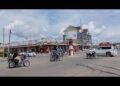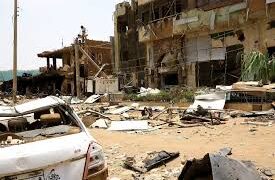


Six months after Sudan’s Armed Forces regained control of Khartoum, the capital remains deeply scarred by two years of intense fighting. As residents return to the city, they are facing severe environmental hazards that are putting millions at risk of serious health issues.
The two-and-a-half-year conflict between the Sudanese army and the paramilitary Rapid Support Forces (RSF) has left the country’s economy, infrastructure, and public health systems in tatters. Across Sudan, factories are damaged, chemicals are leaking, and public services have collapsed, leading to widespread risks to both health and safety.
Mamoun Geely, a factory owner in the Omdurman Industrial Area, described the damage: “Our factory was hit, and we lost control of the stored materials. RSF burned large parts of it, and we were worried about leaks, but there was no access for repairs and no authorities to manage the site safely.”
In Khartoum, key industrial and energy infrastructure has been destroyed, with hazardous chemicals still lingering in some areas. The proximity of these sites to residential areas means that dangerous pollutants are seeping into communities already dealing with economic and social collapse.
Taha Bedawi, an environmental expert, explained how the conflict’s toll on health systems exacerbated the crisis: “The capital was occupied by the RSF militia for two years. Health facilities were occupied as well and became a breeding environment for diseases. This prevented any efforts to control pandemics, as the state was a war zone. Medical staff were targeted and killed, and ambulances were looted.”
Destroyed buildings have also released toxic materials, such as asbestos, into the air. Without the capacity to clear debris, families remain exposed to hazardous dust that can lead to chronic respiratory issues. Meanwhile, the destruction of water and sanitation plants has left waste systems non-functional, causing solid waste to pile up in open areas and drain into the Nile River, further threatening public health.
The lack of clean water and proper sanitation has led to a rise in waterborne diseases like malaria, cholera, and typhoid. Insaf Mohamed, a returning resident, shared her experience: “I got sick a few days after returning home. I have dengue fever and typhoid. Most of my family members are sick. The pollution is everywhere.”
Health professionals are urgently calling for intervention to address the environmental damage, which could take years, if not decades, to fully recover from.