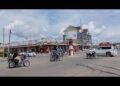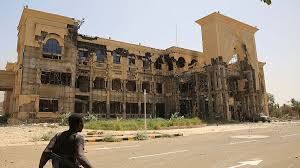


After more than two years of brutal conflict, Sudan’s capital, Khartoum, is slowly coming back to life. Residents who fled the fighting between the Sudanese army and the paramilitary Rapid Support Forces (RSF) are beginning to return but what they’re coming home to is a city in ruins.
Among those returning is Afaf al-Tayeb, who arrived back in the Al-Qawz district in June. Her home, once a place of comfort, now stands as a shell of its former self. “We lost precious belongings we had for years,” she said. “Gold, new appliances, clothes we hid them under the floor, but they were all taken. We have nothing left but the clothes we wear, wash, and wear again.”
Her son, Mohamed al-Khedr, described the devastation: “A shell hit the house and burned everything.” Their story echoes across Khartoum, where buildings still bear the scars of war and entire neighborhoods remain without basic services.
The city was the epicenter of the civil war that erupted in April 2023. Though the army announced its recapture of Khartoum earlier this year, the scale of destruction is staggering. Infrastructure has been gutted, with electrical substations and transformers looted or destroyed.
“The damage is extensive,” said Altayeb Saad al-Din, spokesperson for the Khartoum provincial government. “Major substations are completely down, and the transformers that distribute electricity to homes have been looted.”
Despite the challenges, the United Nations estimates that up to 2 million people could return to Khartoum by the end of the year. But rebuilding the city will require years of effort and billions of dollars in investment.
Nationwide, the toll of war is immense: more than 12 million people have been forcibly displaced, and at least 40,000 lives have been lost. As Khartoum begins its slow recovery, the resilience of its people stands as a testament to hope amid devastation.