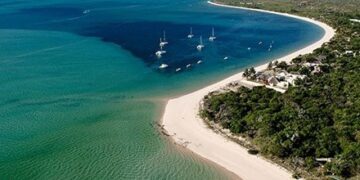


The Bazaruto Archipelago National Park in southern Mozambique is experiencing a population surge, growing from 4,000 residents to over 17,000 in just four years. This rapid increase is raising alarm among conservationists and local officials, who fear the strain on delicate ecosystems within the park’s 1,580 square kilometers of protected islands and marine habitats.
Originally established in 1971 to safeguard species like dugongs and sea turtles, the park includes rich mangrove forests, saltwater lagoons, and birdlife such as flamingos. It spans several islands off the coast of the Inhambane province, including Bazaruto, Benguerra, and Magaruque.
“Population growth in a conservation area is a major challenge,” said park administrator Armando Ngoenha. While human habitation in such protected zones is generally discouraged, the authorities are now rethinking their management strategies.
To address the influx, officials are drafting a new plan that designates specific areas for human settlement. This strategy, developed in collaboration with community leaders, aims to minimize environmental damage while supporting sustainable coexistence.
Some pristine areas may be designated for development to accommodate growing communities, but park leadership stresses the importance of preserving untouched zones to maintain the region’s protected status.