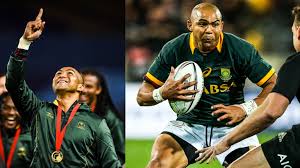


Cornal Hendricks, a former South African rugby player who earned 12 caps for the Springboks and excelled in sevens, has passed away at the age of 37.
His death was confirmed by SA Rugby on Thursday, following a heart attack he suffered on Wednesday. Hendricks had been diagnosed with a heart condition in 2015, which led to his retirement from professional rugby on medical grounds, although he made a return in 2019.
Mark Alexander, the president of SA Rugby, expressed his profound sadness over Hendricks’ unexpected passing, praising him as a ‘remarkable athlete’ who represented South Africa with honor in both sevens and fifteen-man rugby.
The Bulls, the team he played for in the latter part of his career, honored Hendricks for his ‘zeal for life’ and his character as a ‘gentleman on and off the field.’
Throughout his career, Hendricks played 12 test matches as a winger for the Springboks in 2014 and 2015, scoring five tries, and he was part of the South African sevens team from 2011 to 2014, winning a gold medal at the Commonwealth Games in 2014.
He also participated in the Rugby World Cup Sevens in 2013, the same year he was named South Africa’s player of the year in that format. Over a 17-year club career, during which he also played as a center,
Hendricks represented the Cheetahs and the Bulls in Super Rugby and the United Rugby Championship. ‘Cornal was one of those players who loved the game and worked incredibly hard, always with a smile, treating everyone with respect,’ Alexander remarked.
‘His energy and zest for life inspired his teammates and those around him.’ Gayton McKenzie, South Africa’s sports minister, shared a tribute to Hendricks on X, stating: ‘Rest in perfect peace Cornal Hendricks, you have made your mark by inspiring many.’
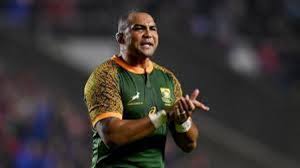
During his tenure with the Bulls from 2019 to 2024, Hendricks demonstrated an extraordinary revival in his professional rugby career, as noted by the director of rugby, Jake White.
White remarked, ‘We all saw him leave no stone unturned, inspiring both his teammates and the South African community with his narrative of hope and bravery.
It was a true privilege to coach him; he served as an exceptional role model for future generations, and his zest for life was contagious. Today, rugby has lost a remarkable individual.’