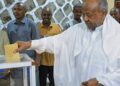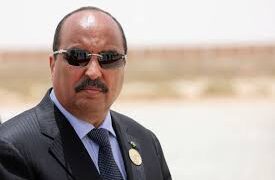


On Wednesday, a Mauritanian appeals court sentenced former President Mohamed Ould Abdel Aziz to 15 years in prison and imposed a $3 million fine, increasing a previous five-year sentence for corruption charges issued in 2023.
Aziz, a former military general who came to power through two coups and served as president from 2009 to 2019, was convicted of money laundering and illicit self-enrichment.
Investigators revealed that he accumulated over $70 million in assets during his decade-long presidency. He has been in custody since his initial conviction last year.
This trial has garnered international attention as a notable instance of an African leader being held accountable for corruption while in office.
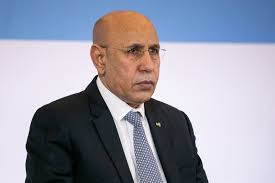
Aziz’s defense team has characterized the charges as politically motivated, claiming they arose from a dispute with his successor, President Mohamed Ould Cheikh Ghazouani.
Once allies, Aziz and Ghazouani’s relationship soured following Mauritania’s first peaceful democratic transition of power in 2019, with tensions rising when Aziz sought to regain influence within the ruling party.
In 2020, a parliamentary commission initiated a comprehensive investigation into alleged corruption during his tenure, ultimately implicating 11 others.
The ruling on Wednesday acquitted six senior officials from Aziz’s former administration but confirmed a two-year prison sentence for his son-in-law on influence peddling charges.
Additionally, the court ordered the dissolution of the ‘Errahma’ (Mercy) Foundation, managed by Aziz’s son, and permitted the seizure of its assets.
Despite its abundant natural resources such as iron ore, gold, copper, oil, and natural gas, Mauritania continues to struggle with significant poverty levels.
The United Nations reports that nearly 60% of the population lives below the poverty line, often engaged in informal employment or agriculture.
Economic difficulties have prompted many young Mauritanians to seek opportunities abroad, with a growing number attempting to migrate to Europe and the United States through irregular channels.
Aziz’s sentencing could represent a crucial turning point in Mauritania’s political and judicial landscape, potentially indicating a firmer approach to combating corruption among high-ranking officials.
Nevertheless, the case remains politically delicate in a nation where democratic institutions are still in the process of being established.