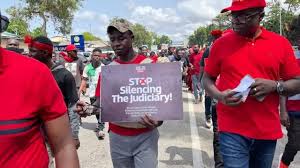


A significant number of opposition demonstrators clad in red and black attire have denounced the decision made by Ghana’s president to suspend the chief justice of the country, insisting on her immediate reinstatement.
They accuse President John Mahama of breaching the constitution by neglecting to adhere to due process, asserting that he is undermining the judiciary’s independence.
Gertrude Torkornoo was suspended from her role last week while investigations into her conduct are underway, marking the first instance of a chief justice being suspended in Ghana’s history.
This action followed the president’s receipt of petitions from three individuals containing undisclosed allegations against Chief Justice Torkornoo.
The demonstration held on Monday in Accra was spearheaded by the principal opposition party, the New Patriotic Party (NPP), which was in power when Chief Justice Torkornoo was appointed by former president Nana Akufo-Addo two years prior.
The NPP’s national organizer, Nana Boakye Yiadom, informed the BBC that her treatment is politically motivated and constitutes an assault on democracy.
Additionally, three smaller opposition factions participated in the protests. The demands of the opposition mirror those articulated by the Ghana Bar Association the previous week.
This assembly of leading legal professionals asserted that the suspension of the chief justice is unconstitutional and that President Mahama must rescind it.
However, this perspective is not universally accepted. Several lawyers within the nation contend that the president possesses the authority to act when there is evidence of misconduct by a public official, regardless of their position, a stance that is also supported by the president’s advocates.
Chief Justice Torkornoo is the third female to assume this role in Ghana. Following her appointment, the National Democratic Congress, led by Mahama, has intensified claims of partiality in her judgments regarding significant political cases, which she refutes.
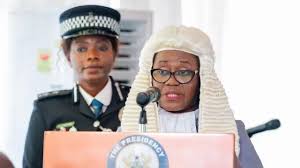
She is anticipated to be called to provide testimony in person before a committee looking into the allegations made against her.
According to Ghanaian law, chief justices are granted security of tenure, allowing them to serve until retirement.
However, the constitution does grant the president the authority to appoint, suspend, or dismiss the chief justice if there is substantiated evidence of misconduct, including incompetence and misbehavior. Nonetheless, some citizens of Ghana contend that due process has not been adhered to in this situation.