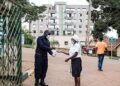
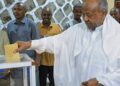
In the remote northern town of Renk, South Sudan, a newly established mobile court has emerged as a symbol of hope, providing essential justice in a region that has long been deprived of it. In just three weeks, this court—formed through a partnership involving the United Nations Mission in South Sudan (UNMISS), national and state judicial authorities, and international collaborators—has addressed 54 cases.
One mother, whose child suffered from a rape incident, emphasized the critical need for justice. She strongly believes that perpetrators must be held accountable for their actions:
“If the accused cannot comprehend the repercussions of his actions, he deserves to be imprisoned. This is my conviction, as I cannot predict the long-term effects on my child. Even if he expresses remorse, my child may still face negative consequences, and I cannot bear that responsibility. Therefore, I insist that he should receive the punishment appropriate for his crime,” she stated.
South Sudan has faced years of conflict that have ravaged its infrastructure and displaced many communities, forcing a reliance on traditional judicial systems. Roufeita Zubeir Mohamed Nur, a prosecutor in Renk, pointed out the difficulties the local court has encountered due to a lack of judges:
“Since 2021, the Renk County Court has struggled significantly due to the absence of a High Court Judge. The backlog of cases has exceeded 60, encompassing serious offenses such as murder, rape, and drug-related crimes. With overcrowded prisons, we are grateful for the presence of the UNMISS-supported mobile court, as it alleviates the pressure on us caused by the prolonged delays in hearing cases and delivering justice,” Nur remarked.
Mobile courts enhance the credibility and trust in the rule of law, as evidenced by the increase in new case registrations following the hearings, indicating that individuals feel more assured that justice will be delivered.
UNMISS is also offering technical assistance, training, and developing new infrastructure aimed at reforming South Sudan’s entire justice system over the long term. This includes bolstering community policing efforts, enhancing the skills of judicial, corrections, and prison personnel, as well as establishing police stations and courthouses.