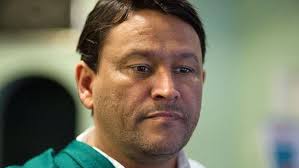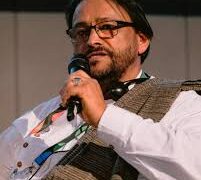


Muhsin Hendricks, recognized as the world’s first openly gay imam, has tragically been shot and killed in South Africa.
The 57-year-old religious leader operated a mosque in Cape Town that served as a sanctuary for LGBTQ+ individuals and other marginalized Muslims. He was fatally attacked on Saturday morning when the vehicle he was in was ambushed near Gqeberha.
According to police reports, “Two unidentified individuals with concealed faces exited their vehicle and began firing multiple shots at the car.”
The news of Hendricks’ death has reverberated throughout the LGBTQ+ community and beyond, leading to a significant outpouring of condolences from around the world.
Julia Ehrt, the executive director of the International Lesbian, Gay, Bisexual, Trans and Intersex Association (Ilga), urged authorities to conduct a comprehensive investigation into what may potentially be a hate crime.
“He provided support and guidance to countless individuals in South Africa and globally as they sought to reconcile their faith with their identities. His life exemplified the healing power of solidarity among diverse communities,” she stated.
Hendricks was reportedly killed shortly after officiating a lesbian wedding, although this detail has not been officially verified.
Details of the incident were revealed through security footage circulated on social media, which shows a car blocking the vehicle carrying Hendricks as it attempted to leave the curb. Police confirmed that he was seated in the back.
CCTV footage captures the incident from one side of the street, showing an assailant exiting a vehicle, rushing towards the targeted car, and firing multiple shots through the rear passenger window.
The Al-Ghurbaah Foundation, led by Hendricks and operating the Masjidul Ghurbaah mosque in Wynberg, Cape Town, confirmed his death in a deliberate attack on Saturday morning.
In response, Abdulmugheeth Petersen, chair of the foundation’s board, urged followers through a WhatsApp group to remain patient, emphasizing the need to safeguard Hendricks’ family.
Hendricks was known for challenging conventional interpretations of Islam and advocating for a compassionate and inclusive approach to faith.
South Africa’s post-apartheid constitution was the first globally to prohibit discrimination based on sexual orientation, and in 2006, it became the first African nation to legalize same-sex marriage.
However, despite a vibrant LGBT community, individuals still encounter discrimination and violence, with the country recording one of the highest murder rates worldwide.
Hendricks publicly identified as gay in 1996, which surprised many in the broader Muslim community in Cape Town and beyond.
That same year, he established The Inner Circle, an organization dedicated to supporting queer Muslims in reconciling their faith with their sexuality, later founding the inclusive Masjidul Ghurbaah mosque.
In 2022, he was featured in a documentary titled The Radical, where he expressed, “The need to be authentic was greater than the fear to die,” reflecting on the threats he faced.
Hendricks frequently emphasized the significance of interfaith dialogue and the necessity of addressing the mental health challenges and trauma experienced by LGBTQ+ individuals within religious settings.
During his address at the Ilga World Conference in Cape Town last year, he stated, “We must cease viewing religion as the adversary.”
Reverend Jide Macaulay, an openly gay Anglican minister, expressed that Hendricks’ passing was “truly heartbreaking.”
Macaulay, a British-Nigerian LGBTQ rights advocate and founder of House of Rainbow, an organization that supports gay individuals in Nigeria—where same-sex relationships and public displays of affection are prohibited—honored Hendricks’ courage.
“Your leadership, bravery, and steadfast commitment to inclusive faith communities have made a lasting impact,” he remarked.
Sadiq Lawal, a gay Muslim residing in Nigeria, shared with the BBC that Hendricks had profoundly influenced many by making “the impossible possible” with his declaration: “I’m a queer imam.”
“He serves as a mentor to numerous queer Muslims in Africa, particularly in Nigeria, in the face of religious extremism,” he noted. “I am still in shock and devastated.”