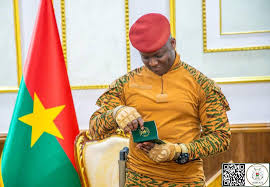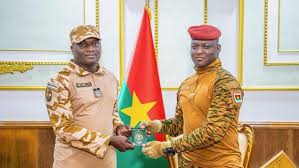


In Burkina Faso, Captain Ibrahim Traoré has made history by becoming the first recipient of the newly launched AES passport, shortly after Burkina Faso, Niger, and Mali marked their formal departure from the West African Economic and Monetary Union (ECOWAS).
This moment is particularly significant amid the ongoing political and economic transformations in the region. The introduction of the AES passport is viewed by many as a means to enhance solidarity among the three nations, especially following their exit from ECOWAS.
Residents of Ouagadougou have expressed optimism that the AES passport will help counteract the misinformation surrounding the region. There is a prevailing belief that this new travel document will better showcase the capabilities and potential of their countries.
Cheik Diallo, a graphic designer based in Ouagadougou, emphasized the importance of the AES passport in reshaping perceptions:
“Typically, negative narratives circulate elsewhere, leading people to believe that the AES is ineffective. However, traveling with this passport demonstrates that the AES is not as it is often misrepresented. The evidence lies in our ability to travel and conduct business. I cannot envision being part of the AES while still relying on an ECOWAS passport.”
The AES passport is currently being produced at the migration division in Ouagadougou and is regarded by many as a means to facilitate travel and strengthen ties among the three countries. The commencement of its production earlier this week represents a significant advancement in the rollout of the AES framework.
Some residents express caution regarding the wider implications of this transition, particularly concerning relations with other ECOWAS nations. A significant worry is that elevated customs fees may continue to hinder travel among Burkina Faso, Mali, and Niger.
Edem Ahebla, a journalist from Ouagadougou, addressed the financial aspects of these developments:
“As a foreigner, traveling from Burkina Faso to Mali incurs a fee, and the same applies to Niger. However, with a common passport, it could foster a sense of unity, potentially altering the costs. That is our aspiration.
Otherwise, a passport remains merely a passport, especially since we still possess our old ones. We were informed that we could obtain the new passport after the old one expires. If the AES passport enables us to visit countries that previously required a visa, that would certainly be beneficial for us.”
Despite these apprehensions, many individuals in Ouagadougou are optimistic that the AES passport will facilitate easier travel and create opportunities to reduce trade barriers, thereby enhancing the economy across the three nations.