

The Gambian government has initiated an inquiry into the sale of assets confiscated from former President Yahya Jammeh, in response to significant public outcry.
Some assets, such as livestock and luxury cars, were sold while a panel was still examining the wealth Jammeh accumulated during his 22-year tenure.
A newspaper investigation revealed potential irregularities and a lack of transparency in the asset sales, leading to protests organized by youth.
In a televised address on Wednesday evening, President Adama Barrow promised ‘full transparency’ in the investigation, asserting that the recovered assets ‘belong to the people.’
Jammeh, who came to power through a coup in 1994, faces accusations of massive theft of government funds and serious human rights violations, including the killing and imprisonment of dissenters.
After losing elections in 2017, he fled to Equatorial Guinea and has denied any wrongdoing.
In the same year, President Barrow established a commission to probe alleged corruption and financial misconduct by Jammeh during his lengthy rule.
The commission, known as the Janneh commission, completed its findings in 2019, recommending the seizure of assets associated with Jammeh and his affiliates.
The investigation revealed that Jammeh is believed to have misappropriated at least $360 million (£270 million) and indulged in extravagant spending on luxury vehicles, aircraft, and real estate.
He has not yet responded to the allegations, but his supporters in Gambia have dismissed the findings as a politically motivated attack.
The assets belonging to Jammeh, which included livestock such as cows, sheep, and goats, as well as farm tractors, vehicles, and other valuables, were designated for seizure by the state.
In 2019, President Barrow authorized a ministerial taskforce to manage the recovery of these assets, providing regular updates to the cabinet.
However, a recent investigative report by the local Republic newspaper alleged that high-ranking government officials were selling these assets to themselves, their friends, and family at prices below market value.
This report gained significant traction on social media, leading to protests in the capital, Banjul, where numerous individuals, including journalists, were arrested but subsequently released.
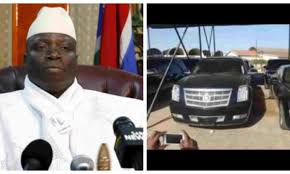
In response to public outcry, the government released a comprehensive list of the assets that had already been sold, which included some of Jammeh’s luxury vehicles, livestock, boats, construction equipment, household items, parcels of land, and heavy agricultural machinery.
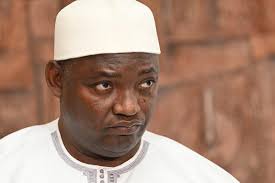
The extensive list detailed the buyers, sale prices, and dates. However, notable luxury vehicles such as Jammeh’s customized Rolls Royce and Bentley were absent from the list.
It remains unclear whether these vehicles were sold or transported to him, as the government had permitted him to take certain items to Equatorial Guinea. The list incited further indignation regarding the seemingly low sale prices of many valuable items.
The government did not provide an explanation for these prices, but the justice ministry stated that the sales were conducted through a ‘legally grounded process.’
The ministry asserted, ‘At all times, the government acted within the confines of the law and in the public interest.’
In his address on Wednesday, Barrow mentioned that he had held a cabinet meeting the day before to discuss the details of the sales, some of which he was learning about ‘for the first time.’
The president announced that both the national parliament and the National Audit Office are conducting simultaneous investigations into the issue.
He stated, ‘The results will be disclosed to the public, and my administration will implement their recommendations to rectify any identified deficiencies and hold accountable those responsible.’
He urged the citizens of Gambia to stay composed, cautioning that his administration ‘will not accept negligence or any misconduct related to the protection of our national resources.’
However, activists and opposition groups have expressed skepticism regarding the president’s assurances, arguing that the parliament cannot be relied upon for a thorough investigation.
Opposition MP Yayah Sanyang has called for an independent inquiry, asserting that the parliament is ‘filled with loyalists of the ruling party.’
The Edward Francis Small Center for Rights and Justice, a human rights organization, has insisted that the president should take accountability and halt the sale of all confiscated assets.
In 2022, the United States confiscated an opulent mansion in Maryland, allegedly acquired by Jammeh using corrupt proceeds.
The US Justice Department’s investigation revealed that Jammeh had obtained at least 281 properties during his tenure and managed over 100 private bank accounts.