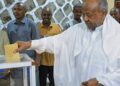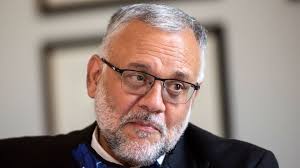


Opposition parties in South Africa have urged the president to resist pressure from the United States following the expulsion of Ambassador Ebrahim Rasool, who was given only 72 hours to leave the country.
Rasool was labeled unwelcome after US Secretary of State Marco Rubio referred to him as a “race-baiting politician who hates America” on Friday.
Relations between South Africa and the US have deteriorated since Donald Trump assumed the presidency.
In response, South Africa’s Minister of International Relations, Ronald Lamola, stated on public broadcaster SABC that “engaging in Twitter diplomacy is not productive,” emphasizing the need for direct dialogue between the two nations. Other political figures expressed more intense reactions.
Julius Malema’s Economic Freedom Fighters (EFF) party released a harsh statement condemning the US, urging President Cyril Ramaphosa “not to let the country be intimidated by the orange clown in the White House.”
Apa Pooe, Secretary General of the Pan Africanist Congress of Azania (PAC), also criticized the US decision, describing it as an infringement on South Africa’s sovereignty and an attempt to influence the nation’s policies.
“South Africa is not a puppet of the US; we have the right to govern our country free from outside interference,” he asserted.
Trump has openly criticized South Africa’s contentious land reform policy, which permits the government to seize land without compensation under certain conditions.
Last month, Trump reduced aid to South Africa, claiming there was discrimination against the white Afrikaner minority, a statement that South Africa has denied.
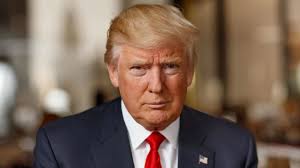
Rasool previously held the position of US ambassador from 2010 to 2015 during Barack Obama’s presidency. He was reappointed as ambassador in 2024 due to his prior experience and extensive network of contacts in Washington. However, he has encountered difficulties in arranging meetings with Trump.
An unnamed South African diplomat remarked to the news outlet Semafor that someone with the ambassador’s “history of pro-Palestine politics” is unlikely to succeed in that role at this time.
The Democratic Alliance (DA), a coalition partner in South Africa’s government of national unity (GNU), has raised concerns about the African National Congress (ANC) continuing to select all foreign diplomats.
“It is simply not appropriate for the ANC to have unrestricted control over foreign policy and diplomat appointments when they represent only 39% of the electorate,” stated DA spokesperson Willie Aucamp to SABC, advocating for GNU members to be permitted to travel to Washington to help alleviate tensions.