

A United Nations investigation has accused Uganda of helping South Sudan carry out airstrikes that killed and severely injured civilians last year.
According to a report by the UN Commission on Human Rights in South Sudan, joint aerial bombardments by the two countries targeted civilian-populated areas, particularly regions dominated by the Nuer community, South Sudan’s second-largest ethnic group and one often associated with opposition groups.
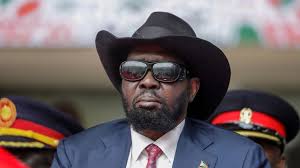
Ugandan troops are currently stationed in South Sudan to support the government of President Salva Kiir in its fight against forces loyal to opposition leader Riek Machar, who was suspended as vice president in September after being charged with criminal offenses.
Ugandan military officials say their troops are in South Sudan at the invitation of the government and under a bilateral security agreement between the two countries.
While Machar is on trial for charges including treason, clashes have intensified in areas considered strongholds of his supporters, as government forces attempt to weaken rebel groups.
The UN report said the airstrikes involved the extensive use of “improvised incendiary devices.”
Ugandan forces entered South Sudan in March 2025 with military equipment such as tanks and armored vehicles, shortly after a militia captured a military garrison near the Ethiopia border.
Weeks later, Machar was placed under house arrest over allegations that he orchestrated the attack on the garrison, accusations he denies. Since then, the South Sudanese government has increasingly relied on aerial strikes in its conflict with Machar’s forces and other armed groups.
During one attack in March 2025 in Wunaliet, about 15 kilometers from the capital Juba, witnesses told investigators that aircraft dropped “barrels of liquid that ignited,” setting homes on fire.
Survivors described scenes of civilians burning, including a child who was reportedly “burnt beyond recognition.” A nearby barracks used by opposition fighters was also hit in the strike.
A day after the bombing, Muhoozi Kainerugaba, Uganda’s top military commander and son of President Yoweri Museveni, posted on X claiming that Ugandan forces had bombed opposition positions.
“Our air offensive will not stop until Riek Machar makes peace with my uncle Afande Salva,” he wrote, referring to Kiir. The post was later deleted but included video footage appearing to show explosions from an aircraft.
Flight-tracking data cited in the UN report indicated that a turboprop aircraft circling the area during the bombing had earlier departed from Uganda and was operated by the Ugandan military.
However, the report did not conclusively state how many operations Uganda was involved in, noting only that there appeared to be “high degrees of planning, operational integration and command-level authorization.”
Uganda has denied participating in combat operations in South Sudan and rejected accusations that it used chemical weapons or barrel bombs, insisting that it does not target civilians.
Human rights groups have raised similar concerns in the past. In 2025, Amnesty International said Uganda had violated a United Nations arms embargo imposed in 2018 that bans most military assistance to South Sudan, including weapons and troop deployments. A UN panel of experts echoed that assessment later in the year.