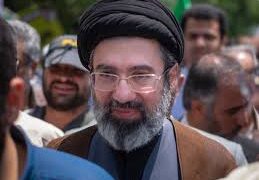


Mojtaba Khamenei, the son of Iran’s late supreme leader Ali Khamenei, has been appointed as the new head of the Islamic Republic of Iran, a move widely seen as ensuring continuity with his father’s hardline leadership.
At 56, Mojtaba Khamenei had held no formal government position during his father’s rule. However, he was long believed to wield significant influence behind the scenes, with speculation that he played an important role in decision-making within the country’s power structure.
He is considered closely aligned with Iran’s conservative establishment and maintains strong ties with the powerful Islamic Revolutionary Guard Corps (IRGC), which quickly pledged its loyalty following the announcement of his leadership.
The country’s third supreme leader also received swift backing from key state institutions. Among those endorsing him were President Masoud Pezeshkian, the armed forces and the judiciary, all of whom expressed support within hours of his appointment.
Known for maintaining a low public profile at official events and in the media, Mojtaba Khamenei’s real influence has long been a topic of speculation both among Iranians and in diplomatic circles.
His appointment was confirmed by the Assembly of Experts, Iran’s top clerical body responsible for selecting the supreme leader. The announcement came in a statement released shortly after midnight on Monday.
The decision effectively created a hereditary transition of power, something the elder Khamenei had publicly rejected in principle in 2024. The move is notable given that the Iranian Revolution of 1979 ended centuries of monarchy under the shah.
Born on September 8, 1969, in the holy city of Mashhad in eastern Iran, Mojtaba Khamenei is the only one of the late leader’s six children to hold a public role.
Ali Khamenei died at the age of 86 after being killed during the first wave of US-Israeli air strikes on Tehran on February 28, an attack that triggered the latest escalation of conflict in the Middle East.


