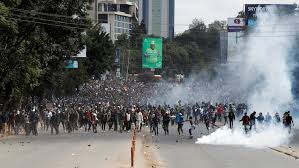


Kenya experienced widespread unrest on Monday as demonstrators took to the streets demanding political reform and protesting corruption, police brutality, and soaring living costs. The protests, timed to coincide with Saba Saba a historic date symbolizing Kenya’s fight for democracy turned violent in several areas.
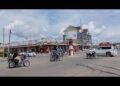
Security forces clashed with protesters in Nairobi, where authorities had blocked major roads into the city. Businesses shut down as tension escalated. Protesters lit fires and threw stones, while police responded with force, firing tear gas and creating barricades with razor wire.
Conflicting death tolls were reported: the Kenya National Commission on Human Rights counted 10 civilian deaths and 29 injuries, while police stated 11 fatalities and injuries among officers. Journalists on the ground witnessed demonstrators carrying a wounded person while chanting anti-police slogans.
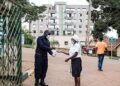
Access to central Nairobi was heavily restricted. Police permitted only individuals deemed essential workers to pass through checkpoints, halting both public and private transport.
Despite the turbulence, Interior Minister Kipchumba Murkomen emphasized the government’s zero tolerance stance on violent protests, while Public Service Minister Geoffrey Ruku urged all government employees to maintain regular work schedules, asserting that public services would continue.