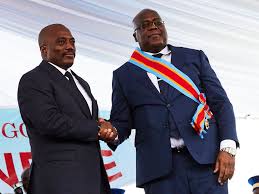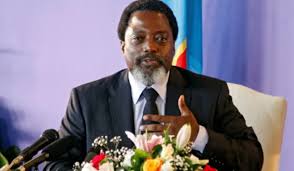


Joseph Kabila, the former president of the Democratic Republic of Congo, expressed on Sunday that his successor, President Félix Tshisekedi, is striving to establish himself as the “absolute ruler of the country” by suppressing dissent through tactics such as intimidation, arbitrary detentions, and extrajudicial killings.
In an opinion article featured in South Africa’s Sunday Times, Kabila criticized the governance of Tshisekedi, asserting that it has played a significant role in exacerbating the ongoing conflict in the eastern part of the nation.
He emphasized that the unrest cannot be solely blamed on the advances of the M23 armed group, which is backed by Rwanda, or the existing tensions between Kinshasa and Kigali.
Recently, M23 forces have swiftly taken control of extensive territories in the resource-rich eastern DRC, raising alarms that the conflict could spill over into neighboring regions.
Kabila pointed out that since Tshisekedi took office in 2019 after winning the election, the situation in the DRC has deteriorated to a critical level, nearing a state of collapse.
He characterized the December 2023 elections, which saw Tshisekedi secure a second term by a wide margin, as a “sham,” accusing the administration of stifling political opposition and enabling the president to become the “absolute master of the country.”
Kabila underscored the prevalence of intimidation, arbitrary arrests, extrajudicial killings, and the forced exile of politicians, journalists, and religious leaders as defining characteristics of Tshisekedi’s administration.
He cautioned that the ongoing violations of constitutional and human rights, along with the repeated atrocities committed against the Congolese populace by Tshisekedi’s security forces, will continue regardless of the outcomes of negotiations between the DRC and Rwanda or the military defeat of M23.
Kabila warned that ignoring the root causes of the situation while concentrating exclusively on the M23 would lead to persistent political turmoil, armed strife, and the risk of civil war.
Any attempt to address this crisis that fails to consider its essential factors—chiefly the governance of the DRC by its current administration—will not succeed in establishing enduring peace.
The M23, which asserts it is protecting the rights of the DRC’s minority Tutsi community, intensified its military operations in 2021, two years following Tshisekedi’s rise to power.
In response, South Africa has sent more than 1,000 troops to the DRC as part of a mission organized by the 16-member Southern African Development Community (SADC) aimed at supporting the government and restoring stability in the region.
Recently, fourteen South African soldiers lost their lives in the ongoing conflict.