

UN High Commissioner for Human Rights Volker Turk on Tuesday condemned the actions of Rwanda-backed rebels who have taken control of a second significant city in eastern Democratic Republic of Congo, alleging that they have committed acts of violence against children and targeted hospitals and warehouses that store humanitarian supplies.
In a statement released on Tuesday, Turk indicated that his office has “confirmed instances of summary executions of children by M23 following their entry into Bukavu last week. We are also aware that some children were found with weapons.”
While he did not specify particular incidents, previous reports from UN agencies have accused both the Congolese government forces and the rebels of enlisting children.
Earlier this month, the United Nations Human Rights Council established a commission to investigate various atrocities, including sexual violence and killings resembling “summary executions” perpetrated by both factions since the start of the year.
The statement further noted that Turk’s office has received information regarding “arbitrary arrests and detentions,” as well as reports of mistreatment and “alleged forced repatriations of Congolese young men escaping violence from neighboring countries.”
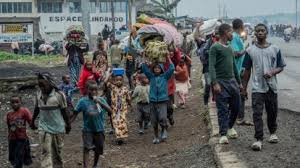
On Sunday, the M23 rebels captured Bukavu, a city with a population of 1.3 million, after previously taking Goma, located 101 kilometers (63 miles) to the north, last month. Reports indicate that at least 3,000 individuals have been killed and thousands more displaced due to the conflict in Goma.
The M23 is the most notable among over 100 armed groups competing for control of eastern DRC’s vast mineral resources, which are essential for the production of much of the world’s technology. According to UN experts, the rebels are backed by approximately 4,000 troops from Rwanda.
Rwanda has accused the Democratic Republic of the Congo (DRC) of recruiting Hutu fighters linked to the 1994 genocide against the Tutsi minority and moderate Hutus. The M23 group claims its mission is to safeguard Tutsis and Congolese individuals of Rwandan descent from discrimination, aiming to transform the DRC from a failed state into a modern nation. However, critics argue that this serves as a cover for Rwanda’s involvement in the conflict.
In contrast to 2012, when M23 briefly captured Goma before retreating under international pressure, analysts suggest that the rebels are now seeking to gain political power.
The prolonged conflict has resulted in the displacement of over 6 million people in the region, contributing to one of the largest humanitarian crises globally.