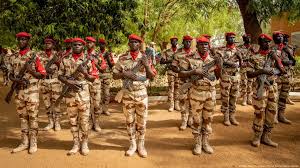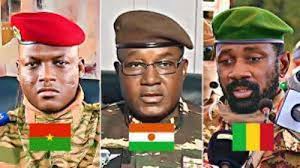


Three countries in Africa’s Sahel region, currently under military rule, are set to collaborate in establishing a joint force of 5,000 personnel to combat the persistent jihadist violence affecting their nations, officials announced on Tuesday.
Burkina Faso, Niger, and Mali plan to form a “unified force” within a matter of weeks, according to Niger’s defense minister.
These three nations, which were once French colonies, experienced military coups that ousted civilian governments between 2020 and 2023. In the aftermath of these coups, they have moved away from French influence and last year established the Alliance of Sahel States (AES).
“In this collaborative framework, our forces will be able to operate together,” Niger’s Defense Minister Salifou Mody stated during a televised interview, noting that the 5,000-member unit is “almost ready.”
“This unified force will not only comprise its own personnel but will also include aerial, ground, and intelligence capabilities, along with a coordination system,” he added, indicating that it should become operational in the coming weeks.
Collectively, these three countries cover an expanse of approximately 2.8 million square kilometers (1.1 million square miles), which is about four times the size of France, situated in northwest Africa.
They are located in the Sahel region, which lies between the arid Sahara Desert to the north and the more humid savannas to the south.
For a decade, each of these nations has endured assaults from jihadist groups affiliated with either Al-Qaeda or the Islamic State, a cycle of violence that governments have struggled to eliminate, even with the support of French military forces.
“We find ourselves in a similar situation, confronting the same kinds of threats, particularly from criminal organizations. It is essential that we unite our efforts,” Mody stated.
“This initiative is innovative and will enhance security for our territories and our citizens,” he added.
The three countries are already engaged in collaborative anti-jihadist operations, particularly in the border region where attacks are most prevalent.
Following their coups, these nations removed French troops that had been aiding in the fight against jihadists, withdrew from the ECOWAS regional organization, which they considered ineffective for their needs, and have sought new partnerships with countries like Russia, which is looking to expand its influence in the area.