

Libya, Algeria, and Tunisia have reached an agreement to manage and share water from a massive underground aquifer spanning their borders. The deal, known as the “Tripoli Declaration,” calls for a fair and coordinated approach to using the region’s limited and non renewable water resources.
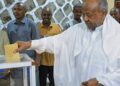
Officials emphasized the need for closer cooperation to ensure sustainability, particularly as climate change and rising demand place increasing strain on water supplies. Libya’s water resources minister, Hosni Aouidat, said the situation requires stronger coordination and joint efforts among the three countries.
The agreement focuses on the North-Western Sahara Aquifer System, one of the largest groundwater reserves in the world. Historically tapped through springs and shallow wells, the aquifer is now being exploited more intensively with deep boreholes reaching up to 1,000 meters underground.
Most of the estimated 40 trillion cubic meters of fossil water lies beneath Algeria, with smaller portions extending into Libya and Tunisia. Under the new framework, the countries will jointly monitor water levels, set usage quotas based on scientific models, and work to prevent overuse and pollution.
According to Hussein al Talou, each nation will receive a defined share of the resource, while ongoing monitoring will track both extraction rates and environmental risks.
Water security is particularly critical for Libya, one of the driest countries globally. It relies heavily on the Great Man Made River, a vast network of pipelines built during the Gaddafi era to transport fossil water from southern aquifers to populated areas in the north.