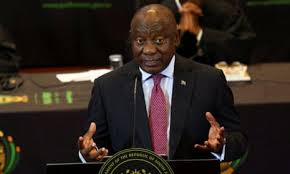


The relationship between South Africa and the United States is undeniably strained, a situation that has persisted for several months.
Since Donald Trump resumed the presidency, tensions have escalated, particularly regarding the US initiative to resettle white South African farmers, whom Trump alleges are victims of ‘racial discrimination’ in their home country.
In March, the US government expelled South African ambassador Ebrahim Rasool following his critical remarks about the Trump administration.
However, could a meeting between the two nations help alleviate these tensions? On Wednesday, Pretoria announced that South African President Cyril Ramaphosa would visit Washington next week for discussions with Donald Trump.
While the South African presidency has not elaborated on the specific topics to be addressed, it is likely that the contentious issue of the refugee status granted to white farmers will be part of the agenda.
Earlier this week, the US accepted 59 white South Africans as refugees, marking the beginning of what the Trump administration describes as a broader relocation initiative for minority Afrikaner farmers, whom Trump claims are facing persecution due to their race.
South Africa, however, refutes these claims, asserting that whites are not being specifically targeted for persecution in the predominantly Black nation.
The Republican president has criticized South Africa for what the US labels as discriminatory laws against whites and has accused the government of inciting violence against white farmers.

The South African government acknowledges that the relatively low incidence of violence against white farmers should be condemned, but asserts that these incidents are part of the broader issue of violent crime in the country and are not driven by racial motives.
Trump stated on Monday that there is a ‘genocide occurring’ against white farmers, which he claims is being overlooked by the international media. However, this assertion has been debunked, most recently by a ruling from a South African court in February.
The criticism from the US regarding what it describes as South Africa’s racist, anti-white legislation seems to target the country’s affirmative action policies aimed at enhancing opportunities for Black individuals, as well as a new land expropriation law that empowers the government to acquire private land without compensation.
While the government maintains that this land law is not intended for confiscation and pertains to underutilized land that can be redistributed for the benefit of the public, some Afrikaner organizations express concerns that it may lead to their land being taken and redistributed to the Black majority population.