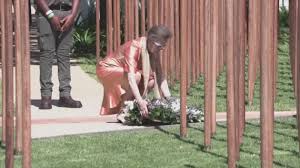


Black South African servicemen who perished in non-combat roles while serving on the Allied side during World War I, with their burial sites remaining unknown, have been commemorated with a memorial that features 1,772 names.
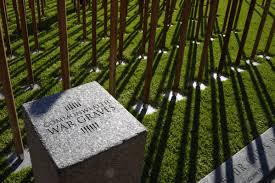
These names are inscribed on African hardwood poles, standing proudly as if reaching for the sky. The precise locations of their graves are still a mystery. After being neglected for over a century, their names have been revived and are now included in historical records.
A granite inscription at the memorial in Cape Town states: “Your legacies are preserved here.”
Due to racial restrictions, they were not allowed to carry weapons and served in the Cape Town Labor Corps, tasked with transporting food, ammunition, and other supplies, as well as building roads and bridges during the Great War.
Their contributions occurred not in Europe, but in peripheral conflicts across Africa, where Allied forces fought in the former German colonies of German South West Africa (now Namibia) and German East Africa (now Tanzania).
These men made the same ultimate sacrifice as approximately 10 million others who died while serving in the military during the 1914-1918 war. In the aftermath, they were largely unrecognized due to the racial policies of British colonialism and the subsequent apartheid regime in South Africa.
The memorial aims to rectify this historical neglect, as stated by the Commonwealth War Graves Commission, the British organization responsible for maintaining war graves, which established the new memorial in Cape Town’s oldest public garden.
The memorial was inaugurated on Wednesday by Britain’s Princess Anne, the commission’s president, who remarked, “It is crucial to acknowledge that those we honor today have been overlooked for far too long.”
They demonstrated remarkable courage and dedication under the most challenging conditions, playing a crucial role in the Allied efforts. The legacy they left behind merits the lasting acknowledgment that this memorial provides, she stated.
South Africa is home to numerous memorials that pay tribute to its white soldiers who fought and died in both world wars, yet the significant contributions of Black servicemen have often been neglected for many years.
This important aspect of history was on the verge of being forgotten until a researcher discovered records of their service in South African army archives approximately ten years ago, as noted by David McDonald, the operational manager for the Commonwealth War Graves Commission, who spearheaded the South African initiative.
The research uncovered the names of over 1,700 Black servicemen and facilitated connections between the commission and the families of six fallen soldiers, most of whom came from remote regions of South Africa.
During a recent ceremony, four of these families attended, laying wreaths at the base of the memorial and having the chance to touch the individual poles that commemorate their lost relatives, each bearing their names.
“It brought us immense pride and happiness,” said Elliot Malunga Delihlazo, whose great-grandfather, Bhesengile, was among those honored.
Delihlazo revealed that his family had only known that Bhesengile had gone to war and never returned. “While it saddens us that we cannot find his remains, we are grateful to finally learn that he passed away in 1917,” Delihlazo reflected.