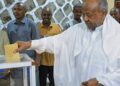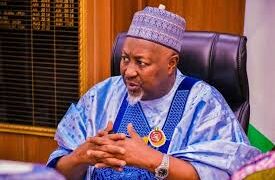


Nigeria’s Minister of Defence, Mohammed Badaru Abubakar, has stepped down with immediate effect due to health concerns, the president’s office announced.
His resignation comes at a time of mounting security challenges across the country, with the government facing intense pressure following a surge in mass kidnappings. According to the UN High Commissioner for Human Rights, at least 402 people mostly schoolchildren have been abducted since mid-November.
President Bola Tinubu has nominated retired General Christopher Musa as Abubakar’s successor. The 58-year-old, regarded as one of Nigeria’s most seasoned military strategists, previously served as chief of defence staff from June 2023 to October 2025 and is known for leading major counter-insurgency campaigns against jihadist groups in the north-east.
Fresh incidents of violence underscored the worsening insecurity over the weekend. Gunmen kidnapped at least 20 people including a Christian pastor, a Muslim bride and her bridesmaids in two separate raids in northern Nigeria. Meanwhile, around 250 schoolchildren and 12 teachers abducted from a Catholic school in Niger State are still missing in one of the largest kidnapping incidents in recent weeks.
While analysts widely attribute most abductions to ransom-seeking criminal gangs, a presidential spokesman told the BBC that authorities believe jihadist groups are responsible for the latest wave.
Abubakar, who served as governor of Jigawa State from 2015 to 2023, was appointed defence minister in August 2023. He informed President Tinubu of his resignation in a written letter. The president accepted his departure and thanked him for his “service to the nation,” reiterating his commitment to tackling the country’s security crisis. Tinubu has declared a national security emergency and plans to reinforce the police force by recruiting an additional 20,000 officers, bringing its strength to around 50,000.
Nigeria continues to grapple with multiple security threats, including kidnappings for ransom, jihadist insurgency in the north-east, separatist unrest in the south-east, and violent clashes between herders and farmers in central regions. Experts say corruption, weak intelligence sharing, and under-resourced local policing have hindered efforts to restore stability.
The Senate is expected to begin confirmation hearings for Gen Musa soon. If approved, he would oversee what is expected to be Nigeria’s most far-reaching security overhaul in decades.
Meanwhile, international scrutiny is growing. The US House Committee on Appropriations will hold a high-level roundtable on Tuesday to discuss allegations of Christian persecution in Nigeria. “We will never turn a blind eye to our brothers and sisters in Christ who suffer for their faith,” committee chairman Tom Cole posted on X.
Earlier in November, former US President Donald Trump warned he would consider military intervention in Nigeria if attacks on Christians continued claims Nigerian officials and security experts have countered by stressing that both Muslims and Christians have been victims of the violence.
Last week, Nigeria’s National Security Adviser, Mallam Nuhu Ribadu, led a delegation to Washington, where both nations agreed to establish a joint working group to strengthen defence and security cooperation.