Kenya’s Interior Minister Kipchumba Murkomen has accused demonstrators of attempting to overthrow the government following a wave of deadly protests that swept across the country on Wednesday. The unrest, which erupted in 23 of Kenya’s 47 counties, left at least 16 people dead, according to the state funded human rights commission.
The protests, largely driven by young Kenyans and organized via social media, marked the first anniversary of last year’s anti-tax demonstrations that saw parliament stormed and over 60 people killed. This year’s protests quickly escalated into broader demands for an end to police brutality and improved governance, with many chanting for President William Ruto’s resignation.
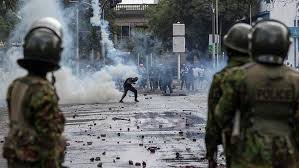
In a press briefing on Thursday, Murkomen described the protests as a “coordinated and unconstitutional attempt to change the regime”, asserting that demonstrators had targeted key government institutions including parliament and the president’s residence, both of which were barricaded with razor wire.
Murkomen toured parts of Nairobi to assess the damage, where businesses had been looted and at least two police stations were torched. He vowed that police would use CCTV footage to identify and arrest looters. “Criminal anarchists unleashed a wave of violence, looting, and destruction,” he said, while defending the police response and assuring officers that “the government has your back”.
Rights groups, however, have raised concerns over the use of force. Amnesty Kenya reported that all 16 fatalities were caused by gunshots, allegedly fired by police.
As Kenya reels from the violence, calls for dialogue between the government and the youth led movement often referred to as “Gen Z” are growing louder. The unrest has reignited debate over civil liberties, economic hardship, and the role of law enforcement in a deeply polarized nation.