

Kenya’s national high-school drama competition has been marred by its own turmoil after police used tear gas to disperse a crowd that had assembled to view a contentious play.
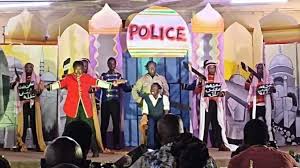
The production, Echoes of War, explores the influence of digital platforms on governance and the capacity of youth to drive societal transformation, drawing striking parallels to the current political climate in Kenya.
Initially disqualified from the drama festival under ambiguous circumstances, a High Court later intervened, reversing the decision and mandating its inclusion.
Tensions escalated in the western town of Nakuru on Thursday morning when students exited the venue in protest, calling for the release of the play’s author.
Cleophas Malala, the scriptwriter and former senator who created the piece for students from Butere Girls School, was prevented by police from meeting with the students for final rehearsals on Wednesday evening.
Malala was subsequently released without charges and commended the students for their boycott of the play. “The young girls of Butere Girls’ have demonstrated an act of heroic restoration. I am committed to ensuring that Echoes of War is presented to a Kenyan audience,” Malala stated shortly after his release.
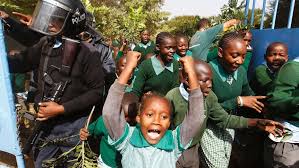
The students briefly sang the national anthem before leaving the hall in a dramatic fashion, which had been cordoned off by anti-riot police equipped with batons and tear gas canisters.
“There’s no audience. Who are we performing for?” one of the girls expressed to reporters. They also voiced concerns about police intimidation.
In response to news of Malala’s arrest, large crowds had gathered outside the venue, eager to see the play. However, anti-riot police had been stationed overnight to prevent disturbances and used tear gas to disperse the potential audience.
Education Minister Julius Ogamba raised concerns about Malala’s participation in the competition, noting that she is neither an educator nor a theater director.
This controversy has ignited significant public backlash, with the human rights organization Amnesty International highlighting a troubling trend of government-led suppression of free speech, press freedom, and the right to assemble.
Kalonzo Musyoka, a leading opposition figure, criticized the police for using tear gas near students and commended the “courageous” girls for refusing to perform.
In a statement, the opposition party Orange Democratic Movement (ODM) called for the students to be permitted to present their play alongside other competitors.
The play addresses the growing divide between the older and younger generations, who are advocating for change through innovation and technology.
It also sheds light on some of Kenya’s most urgent issues, many of which fueled youth-led violent protests last year.