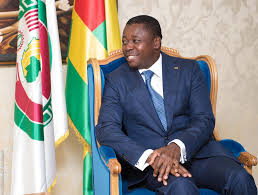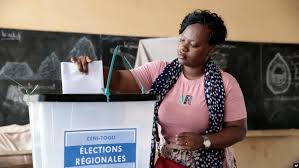


The Union for the Republic, under the leadership of President Faure Gnassingbé, achieved a significant victory in the recent elections, winning 34 out of 41 available seats as part of the transition to a parliamentary system.
In Togo, the ruling party announced its acquisition of 34 Senate seats, as reported by the electoral commission on Sunday, February 16, following a vote that concluded a contentious constitutional reform process that faced opposition criticism.
Dago Yabré, the head of the electoral commission, remarked, “We will promptly submit these provisional results to the Constitutional Court, which is the only authority authorized to issue the final results,” after the announcement of the results in Lomé.
The formation of the Senate marks the final step prior to the implementation of the new Constitution, which was enacted in May by President Faure Gnassingbé, who has been in power since 2005, succeeding his father, who ruled for nearly thirty-eight years.
The new Constitution eliminates the election of the head of state by universal suffrage and introduces a parliamentary system, where the president’s role will be largely ceremonial, while the prime minister, who must lead the majority party in the National Assembly, will wield actual power.
Faure Gnassingbé is expected to continue as prime minister, following his party, the Union for the Republic (Unir), securing a decisive victory in the April legislative elections by winning 108 out of 113 seats, once the Senate is officially established.
The president of the Republic will be elected by both deputies and senators.
The reform has faced criticism from both the opposition and civil society, who argue that it enables Faure Gnassingbé to maintain his position indefinitely, contrary to the previous Constitution which restricted him to a final term ending in 2025.
Supporters of the presidential camp assert that this constitutional amendment improves representation.
The Senate will be composed of 61 members, with 20 of them appointed by the prime minister.
On Saturday, a total of 1,527 municipal councilors and 179 regional councilors were scheduled to elect the senators.
Several prominent opposition parties, such as the National Alliance for Change, the Democratic Forces for the Republic, and the Dynamic for the Majority of the People (a coalition of political parties and civil society organizations), chose to boycott the election.
The leading opposition party, the Alliance of Democrats for Integral Development, participated in the election but managed to secure only one seat.