

Civilian deaths in Sudan have surged dramatically in 2025, with killings more than doubling compared to the previous year, the United Nations human rights chief warned on Thursday.
Addressing the UN Human Rights Council, UN High Commissioner for Human Rights Volker Turk described the conflict as “ugly, bloody and senseless,” blaming both the Sudanese army and the Rapid Support Forces (RSF), as well as foreign backers fueling what he called a “high-tech” war.
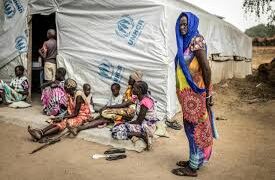
Since fighting erupted in April 2023 between forces loyal to army chief Abdel Fattah al-Burhan and the RSF, tens of thousands have been killed and about 11 million people displaced, creating one of the world’s worst humanitarian crises.
Turk said his office’s documentation shows that civilian killings in 2025 have risen to more than two-and-a-half times last year’s total, with thousands more people missing or yet to be identified. No official overall death toll has been released.
He condemned widespread atrocities, including sexual violence, summary executions and arbitrary detentions. Turk cited repeated attacks by the RSF on the Zamzam displacement camp and the city of El-Fasher in North Darfur, describing the violence as “heinous and ruthless.”
Sexual violence has escalated sharply, with more than 500 cases documented this year alone, including rape, gang rape, sexual torture and sexual slavery. Turk said women and girls were being deliberately targeted to terrorise communities and warned that such crimes could intensify.
As fighting spreads deeper into the Kordofan region following the fall of El-Fasher, drone strikes have increasingly targeted civilian areas. Since January, nearly 600 civilians have been killed or injured in escalating drone attacks, including strikes on humanitarian aid convoys.
The UN’s resident and humanitarian coordinator for Sudan, Denise Brown, said access to key cities such as Kadugli and Dilling in South Kordofan has been severely restricted, hampering aid delivery and forcing staff withdrawals for safety reasons. Famine has already been declared in El-Fasher and Kadugli, with Dilling also believed to be facing famine conditions.
Turk expressed alarm over the growing use of explosive weapons in densely populated areas and the deployment of advanced long-range drones that have brought violence to previously peaceful regions. He also warned about the increasing militarisation of society, including the recruitment of children and young people.
Several countries have been accused of backing the rival factions. The United Arab Emirates has denied allegations of arming the RSF, while Egypt, Iran, Turkey and Saudi Arabia have been reported to support the Sudanese army.
Efforts to broker a ceasefire have repeatedly failed. Turk called for sustained diplomatic pressure to secure a humanitarian truce leading to a permanent ceasefire, as Sudan’s devastating conflict shows little sign of abating.