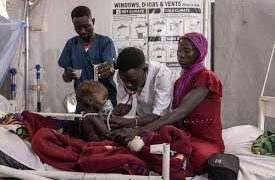


Patients at Alban Jadeed Hospital urgently require assistance after nearly two years of conflict that has isolated residents and disrupted supply lines. Consequently, doctors are forced to ration therapeutic milk and other essential treatment products.
The conflict that began in April 2023, stemming from a power struggle between Sudan’s military and the paramilitary Rapid Support Forces (RSF), has resulted in what the United Nations describes as the most severe humanitarian crisis in the world.
Currently, approximately half of Sudan’s 50 million population is experiencing varying levels of acute hunger, with famine conditions reported in at least five regions, including several areas in North Darfur State in western Sudan.
The actual situation may be even more dire, as ongoing fighting has hindered accurate data collection in many regions, according to medical professionals and aid workers.
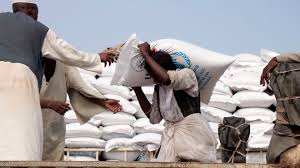
In the greater capital of Sudan, where Khartoum, Omdurman, and Bahri are separated by the Nile River, the warring factions have obstructed the delivery of humanitarian aid and commercial goods, resulting in skyrocketing prices that are unaffordable for most residents.
Last year, Alban Jadeed Hospital, located in the Sharg Elnil district of Bahri, treated over 14,000 children under the age of five suffering from severe acute malnutrition, along with an additional 12,000 with milder forms of malnutrition, as reported by Azza Babiker, head of the therapeutic nutrition department. Only 600 of the children tested were found to be at a normal weight.
Babiker noted that the supply of therapeutic formula milk from UNICEF and Médecins Sans Frontières (MSF) is inadequate, as RSF soldiers have stolen these supplies on two occasions, while both factions deny obstructing aid deliveries.
The significant decrease in USAID funding is anticipated to exacerbate the situation, negatively impacting the budgets of aid organizations that supply essential nutritional resources and community kitchens that many depend on, according to aid workers.
Recently, the army has taken control of Sharg Elnil from the RSF, contributing to its recent territorial gains in the capital.
There is a severe shortage of fruits and vegetables. “In addition to the challenges of sourcing these items, not all families can afford to purchase them,” noted Babiker.
Many mothers are struggling to produce milk, often due to trauma from RSF assaults or their own malnutrition, explained Dr. Raneen Adel from Alban Jadeed.
“There are instances of mothers arriving dehydrated… for example, when the RSF invaded their home, the fear caused them to stop lactating, or they suffered physical abuse,” she added.
The RSF has not yet provided a response to the request for comment.
The combination of inadequate nutrition and poor sanitation has resulted in cases of blood poisoning and other health issues, while the hospital is also facing a shortage of antibiotics.