

Nigeria’s president has declared a state of emergency in the oil-rich Rivers State, suspending its governor and lawmakers on Tuesday due to a political crisis and incidents of pipeline vandalism that threaten the nation’s position as Africa’s leading oil producer.
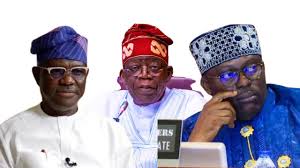
Tensions in Rivers State have escalated over the past few months between the current Governor Siminalayi Fubara and state legislators, many of whom are aligned with his predecessor.
Recently, some lawmakers began impeachment proceedings against the governor, alleging various illegal actions related to the state budget presentation and the structure of the legislative assembly.
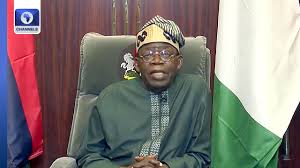
In a televised address, President Bola Tinubu announced the suspension of the governor and other elected officials, including state lawmakers, for a period of six months.
The president criticized the governor for failing to take action against recent pipeline vandalism incidents, including a blast that caused a fire on the Trans Niger Pipeline within the last 24 hours.
“Given these circumstances, no responsible president would remain passive while such a serious situation persists without implementing constitutional measures to rectify the issues in the state,” Tinubu stated.
Retired Vice Admiral Ibokette Ibas, formerly the chief of Nigeria’s navy, will assume the role of military administrator for Rivers State, while the judiciary will continue its operations, according to Tinubu.
In response to the president’s announcement, military vehicles were swiftly dispatched to the Rivers State Government House.
The Nigerian Constitution permits the imposition of emergency rule to uphold law and order under exceptional circumstances. This marks the first emergency declaration in over ten years for a nation of more than 210 million people, which has faced numerous challenges to its democracy due to prolonged military governance and instability.
The Nigerian Bar Association has condemned the suspension of the governor and other elected officials, deeming it unlawful. “An emergency declaration does not inherently lead to the dissolution or suspension of elected state governments,” stated Afam Osigwe, the association’s president, in a press release.
The previous emergency in Nigeria was announced in 2013 by President Goodluck Jonathan, affecting the northeastern states of Adamawa, Borno, and Yobe during the peak of the Boko Haram crisis. Notably, the state governors were not suspended at that time.