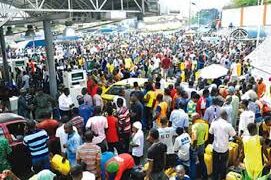


For nearly a week, service stations in Niger have been struggling to provide sufficient premium fuel to satisfy local demand.
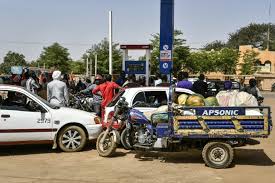
Consequently, long lines of vehicles and motorcycles have formed at the stations that do have fuel available.
The Niger Petroleum Company, SONIDEP, is implementing fuel rationing, and many individuals express that this complicates their daily routines.
Moussa Kassou recounts his experience of driving to the Boukoki district in the capital, Niamey, only to find that there was no petrol available.
“Now, someone has just informed me to head to Wadata. A person has a liter of petrol. To obtain two or three liters, you end up wasting a liter and a half; it’s a nightmare,” he explains.
Experiencing a fuel shortage is uncommon for the people of Niger. As an oil-rich nation, it established its first refinery in 2011.
Currently, due to various factors, the country is unable to fulfill the national demand, which exceeds two million liters per day.
Concerns are growing regarding the lack of transparency in fuel management.“We lack adequate information on this issue because the authorities, who are supposed to provide us with clear explanations, are failing to do so. We are left in the dark. We don’t have any substantial information,” states Niamey resident Assoumane Hamadou Souley.
SONIDEP attributes the current situation to a shortage of stock; however, transport operators, who are the most affected, reject this explanation.
In addition to the fuel scarcity, they are experiencing a decline in their customer base.
The Taxi and Urban Transport Drivers’ Union (SYNCTAXITU) advocates for the government to boost daily production to satisfy demand.
“We believe the government needs to enhance production levels, as having only 25 trucks for the city of Niamey is insufficient,” stated General Secretary Agali Ibrahim.
“Currently, when oil smuggling is halted, everyone rushes to the pumps. With so many people at the pumps, the available supply is inadequate.”
Plans are in place to increase the number of tanker trucks operating in the capital from 24 to 100 per day.
Various organizations are also urging the government to reopen borders with Benin and Nigeria to secure temporary fuel supplies.