

Marcelo, the legendary Real Madrid player renowned for his distinctive hairstyle and status as one of the most decorated athletes in soccer history, announced his retirement on Thursday at the age of 36.
“My journey as a player concludes here, but I still have much to contribute to football. Thank you for everything,” the Brazilian expressed in a video posted on X.
A defender known for his offensive prowess, Marcelo enjoyed one of the most illustrious careers in soccer, highlighted by his tenure at Madrid from 2007 to 2022 and a return to his childhood club, Fluminense, during the 2023-24 season. He also represented Brazil in the World Cups of 2014 and 2018, earning Olympic medals in 2008 (bronze) and 2012 (silver).
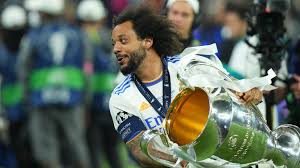
During his time at Madrid, he secured five Champions League titles, six Spanish league championships, and a total of 25 trophies.
“Marcelo is an integral part of Real Madrid’s history and stands as one of the great legends of our club and of global football,” stated the club.
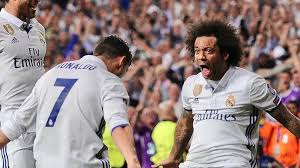
Marcelo made his move to Europe in 2006 when Real Madrid was experiencing a downturn. He played a crucial role in helping the club achieve one of its most successful eras, particularly by exploiting the spaces created by Cristiano Ronaldo on the left side of the attack.
Ronaldo honored his former teammate by referring to him as a “brother.”
Ronaldo expressed his admiration on X, stating, “My brother, what an extraordinary career! We have shared so many experiences together, filled with achievements, victories, and unforgettable memories. You have been more than just a teammate; you are a lifelong companion. Thank you for everything, my friend. I wish you all the best as you embark on this new chapter of your life.”
Marcelo made 546 appearances over 16 seasons before departing from Real Madrid in 2022, having secured his fifth European Cup. At that point, he held the record for the most titles in the club’s history, a record that has since been surpassed by Luka Modric and Nacho Fernández, both with 26 titles.
Following a short stint with Olympiakos in Greece, Marcelo returned to Fluminense, the club where he began his career, and went on to win the Copa Libertadores.