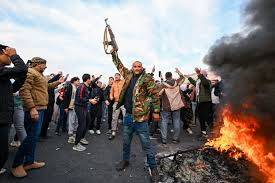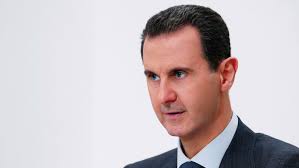


Syrian President Bashar Assad departed the country on Sunday, marking a dramatic conclusion to his nearly 14-year effort to maintain authority amid a devastating civil war that has transformed Syria into a battleground for both regional and international powers.
The departure of the 59-year-old Assad sharply contrasts with his initial months as Syria’s unexpected president in 2000, when many anticipated he would emerge as a youthful reformer following three decades of his father’s authoritarian rule. At the age of 34, the Western-educated ophthalmologist presented himself as a tech-savvy individual with a mild demeanor.
However, when faced with protests against his regime that began in March 2011, Assad resorted to the oppressive methods employed by his father to suppress dissent. As the protests escalated into a full-blown civil war, he unleashed military force on opposition-held cities, receiving backing from allies such as Iran and Russia.
International human rights organizations and prosecutors have accused the Syrian government of widespread torture and extrajudicial killings within its detention facilities. The conflict has resulted in nearly half a million fatalities and displaced approximately half of Syria’s prewar population of 23 million.
In recent years, the conflict seemed to reach a stalemate, with Assad’s government regaining control over most of Syria’s territory, while the northwest remained under opposition control and the northeast was governed by Kurdish forces.
Despite the ongoing severe Western sanctions on Damascus, neighboring nations have begun to accept Assad’s persistent grip on power. The Arab League reinstated Syria’s membership last year, and in May, Saudi Arabia announced the appointment of its first ambassador to Syria since severing diplomatic relations 12 years ago.
The geopolitical landscape shifted dramatically when opposition factions in northwest Syria launched an unexpected offensive in late November. Government forces rapidly disintegrated, while Assad’s allies, distracted by other conflicts such as Russia’s engagement in Ukraine and the ongoing hostilities involving Israel and Iran-backed groups like Hezbollah and Hamas, seemed hesitant to intervene decisively.