

Families and survivors are grieving the victims of last week’s devastating collapse at the Rubaya coltan mine in eastern Democratic Republic of Congo, as the government in Kinshasa accuses M23 rebels of illegally exploiting the region’s natural resources.
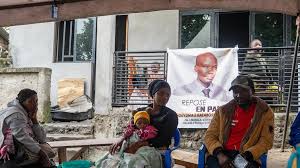
On Monday, mourners gathered quietly in the courtyard of a modest home in Goma. Family members sat close together, some scrolling through their phones, others holding photographs of Bosco Nguvumali Kalabosh, one of the miners killed in the disaster.
Kalabosh died when heavy rains triggered a landslide at the Rubaya mine, crushing several hand-dug tunnels. The collapse is believed to have killed at least 200 miners, making it one of the deadliest mining disasters the region has experienced in years.
His younger brother, Timothée Nzanga, described the chaotic and painful search for survivors.
“They extracted the people closest and several were found lifeless and placed aside,” he said. Kalabosh’s body was not recovered until the following day. “It took considerable force to try to free his body. During these searches they also discovered other bodies, those of unknown people, which they simply placed nearby.”
Nzanga said the loss has left Kalabosh’s family facing an uncertain future. “After his passing, only God knows what will become of his family,” he said.
The collapse occurred at the Rubaya mining site, around 40 kilometres west of Goma, after days of torrential rain. The area is controlled by the Rwanda-backed M23 rebel group, which seized Rubaya in 2024 and now oversees one of Congo’s most important coltan deposits. The mineral is essential for the production of mobile phones, computers and military equipment.
Artisanal miners at Rubaya work in long, narrow tunnels dug by hand, often without adequate structural supports or escape routes. When one tunnel collapses, it can trigger a chain reaction, trapping large numbers of miners underground.
Survivor Tumaini Munguiko recalled the moment disaster struck.
“We were in the mine when it started to rain,” he said. “We saw the hill collapse on the miners. Some came out safe and sound, and others died.”
Following the collapse, M23 authorities suspended artisanal mining at the site, while efforts to recover bodies and search for survivors continue.
In a statement posted on social media, Congo’s government expressed solidarity with the victims’ families and accused M23 of illegally and dangerously exploiting eastern Congo’s natural resources.
- Latest
- Trending