

Hundreds of thousands of refugees in Kenya’s Kakuma camp are facing severe food shortages following drastic cuts to US funding for the UN’s World Food Programme (WFP). The crisis, described as “slowly starving“ by a UN official, has left food rations at their lowest levels ever, sparking desperation among the nearly 300,000 displaced people residing in the camp.
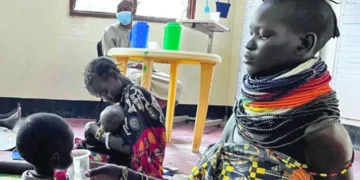
The impact is starkly visible at Kakuma’s Amusait Hospital, where emaciated children lie motionless, receiving treatment for severe malnutrition. Among them is nine month old James, whose mother, Agnes Awila a refugee from Uganda revealed that her children now eat only once a day.
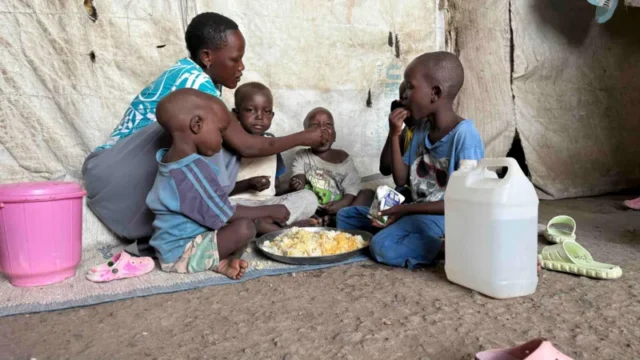
Another mother, Mukuniwa Bililo Mami, originally from the Democratic Republic of Congo, shared how the drastic reduction of food rations to just 30% of the recommended daily intake has made survival nearly impossible.
US Aid Cuts Deepen the Crisis
The crisis stems from sweeping cuts to US foreign aid programs under President Donald Trump’s “America First” policy. The US had contributed around 70% of WFP’s funding in Kenya, and its withdrawal has forced the agency to drastically reduce food allocations and suspend monthly cash transfers intended for refugee families.
Felix Okech, WFP’s head of refugee operations in Kenya, warned that if funding remains stagnant, the crisis could escalate further, putting thousands more at risk of starvation by August.
Refugees Struggle to Survive
At Kakuma’s food distribution center, long queues snake through the dusty ground as security officers manage crowds. Refugees now receive barely enough food to last a month, but are expected to stretch their rations for two months.
Meanwhile, the collapse of cash assistance, known as “bamba chakula”, has led to the disintegration of local markets that once allowed refugees to buy essential food supplies.
The situation remains dire, and the prospects of additional funding are slim. While some donors have signaled limited support, a 70% funding gap remains, threatening thousands with continued hunger and malnutrition.
Without urgent intervention, Kenya’s refugee population faces a worsening humanitarian crisis, with hunger and despair spreading through the camps.


