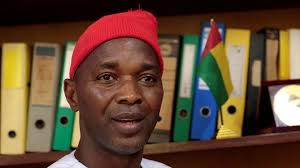


Nigeria has granted asylum to Guinea-Bissau presidential candidate Fernando Dias, just days after a military coup halted the announcement of election results and plunged the country into uncertainty.
Dias, 47, who ran under the Party for Social Renewal, had been under special protection at the Nigerian embassy in Bissau following threats against his life, Nigeria’s foreign minister confirmed. He was the main challenger to incumbent President Umaro Sissoco Embaló, who has since fled the country after the military takeover.
A delegation from ECOWAS has been in Guinea-Bissau urging the junta to relinquish power and release the results of the 23 November presidential election. Both Embaló and Dias had claimed victory before the coup disrupted the process. The PAIGC the historic liberation party had been barred from fielding a candidate, further heightening political tensions.
The coup occurred three days after the vote. Soldiers suspended the electoral process, blocked the release of results, and claimed they acted to prevent an alleged destabilization plot. The junta has since banned all demonstrations and any actions it deems harmful to national stability.
Unrest continues in Bissau as PAIGC reported that heavily armed militia groups “illegally invaded” its headquarters. Party leader Domingos Pereira was arrested on the day of the coup, according to relatives and party officials. Dias said he escaped from his campaign headquarters as armed men arrived to detain him.
Nigerian Foreign Minister Yusuf Tuggar said President Bola Tinubu authorized Dias’s protection inside the Nigerian embassy, stating the decision reflects Nigeria’s commitment to safeguarding Guinea-Bissau’s democratic will. Nigeria has also requested ECOWAS peacekeepers to be stationed at the embassy to ensure Dias’s safety.
Mediation talks on Monday between the ECOWAS delegation led by Sierra Leone’s Foreign Minister Alhaji Musa Timothy Kabbaand the junta were tense. Kabba later said discussions were “productive” but acknowledged significant concerns on both sides.
The junta has sworn in Gen. Horta N’Tam as transitional leader for a one-year period, prompting ECOWAS to suspend Guinea-Bissau from all decision-making bodies until constitutional order is restored.
Speculation continues to swirl around the true motives behind the coup. Some regional political figures, including Senegal’s Prime Minister Ousmane Sonko and former Nigerian President Goodluck Jonathan, have described the takeover as possibly “fabricated,” though without offering evidence. Certain civil society groups within Guinea-Bissau have similarly accused Embaló of orchestrating a “simulated coup” to prevent election results from being released if they were unfavorable to him an allegation he has not addressed.
Embalo, 53, was permitted to leave for Senegal on Thursday before reportedly traveling onward to Congo-Brazzaville over the weekend.
Guinea-Bissau, long plagued by instability, has endured at least nine coups or attempted coups since independence from Portugal in 1974. Its strategic location between Senegal and Guinea has also made it a notorious hub for drug trafficking, further entrenching the military’s influence in national politics.