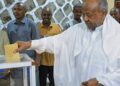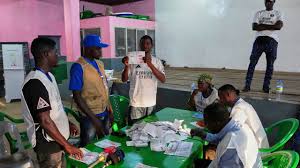


Vote counting commenced Sunday evening across several polling stations in Guinea, following a high-stakes referendum on a proposed constitution that could pave the way for the country’s military leader, General Mamadi Doumbouya, to run for president.
The referendum marks a pivotal moment in Guinea’s transition from military to civilian governance. However, it has drawn sharp criticism from opposition groups and international observers, who view the move as a strategic bid to entrench military rule. Doumbouya, who seized power in a 2021 coup, remains a polarizing figure admired by many for his promises of national development, yet condemned by others for sidelining democratic institutions.
Last year, the junta dissolved over 50 political parties, and just weeks before the vote, suspended the three main opposition groups, effectively silencing dissent and preventing public mobilization. In response, opposition leaders urged citizens to boycott the referendum. “They broke their promises,” said Ibrahima Sory Diallo, a clothing vendor in Conakry, who chose not to vote.
Despite the boycott, enthusiasm was visible among Doumbouya’s supporters, especially younger voters drawn to his vision of a modern Guinea. With 6.7 million registered voters, the referendum requires at least 50% turnout to be validated. Polls opened at 7 a.m. and were scheduled to close at 6 p.m., though some stations extended hours to accommodate voters.
The vote was managed by the newly formed Directorate General of Elections, whose leadership was appointed by Doumbouya himself. If the draft constitution is approved, national elections are expected to follow in December.
Guinea joins a growing list of West African nations Mali, Niger, and Burkina Faso among them where military regimes have disrupted democratic transitions.