

The Trump administration has taken a markedly hostile stance toward South Africa, treating it almost like a diplomatic outcast. Washington has blacklisted South African envoys, refused to send senior officials to its events, and threatened steep tariffs that could worsen the country’s economic crisis.
The latest blow came when South Africa’s Democratic Alliance (DA), the second largest party in the ruling coalition, revealed that the US had denied a diplomatic visa to President Cyril Ramaphosa’s special envoy, Mcebisi Jonas, in May. Jonas, a respected former deputy finance minister and current chairman of telecom giant MTN, was appointed to help mend ties with Washington. The US reportedly refused to recognize him as an official representative.
While Ramaphosa’s office dismissed the DA’s claims as “disinformation,” it stopped short of a direct denial. The US State Department declined to comment, citing visa confidentiality.
This incident fits a broader pattern of disengagement. The Trump administration had already:
- Cut aid to South Africa
- Accused Ramaphosa’s government of persecuting white citizens
- Condemned South Africa’s genocide case against Israel at the ICJ
- Criticized its renewed ties with Iran
Foreign policy expert Priyal Singh noted that if the DA’s claims are accurate, they reflect a deliberate US strategy to isolate South Africa and sever key diplomatic channels.
The US has also distanced itself from South Africa on the global stage. Despite Ramaphosa chairing the G20 and advocating for developing nations, US Treasury Secretary Scott Bessent skipped a key G20 finance ministers’ meeting in South Africa, sending a lower-ranking official instead. Secretary of State Marco Rubio similarly avoided a G20 foreign ministers’ meeting, citing South Africa’s alleged “anti-Americanism.”
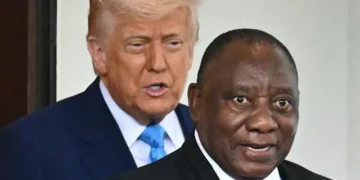
Even after Trump invited Ramaphosa to the Oval Office in May, the meeting turned confrontational. Trump reportedly ambushed Ramaphosa with misleading reports alleging a white genocide in South Africa. Notably, Jonas was absent from the delegation, reinforcing claims that he was unwelcome in Washington.
Relations further deteriorated after South Africa’s ambassador to Washington, Ebrahim Rasool, was expelled for accusing Trump of promoting white victimhood and supremacist rhetoric. Ramaphosa left the ambassador post vacant, suggesting a lack of suitable diplomats to repair ties with the US South Africa’s second largest trading partner.
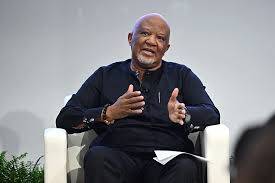
Jonas’s appointment was meant to fill that gap, with a mandate to lead negotiations and build strategic partnerships. However, his past remarks calling Trump a “racist” and “narcissistic right winger” resurfaced, complicating his role. MTN’s 49% stake in Iran’s telecom firm IranCell also raised red flags in Washington.
South Africa’s cautious response to US airstrikes on Iran expressing “anxiety” and calling for dialogue highlighted its more measured approach. But ideological differences remain stark. Analyst W Gyude Moore noted that South Africa’s embrace of “solidarity, equality, and sustainability” clashes with Trump’s base, which views such values as “woke culture.”
The Trump administration has also criticized South Africa’s Black Economic Empowerment policies, labeling them discriminatory against white citizens. Ramaphosa’s government defends them as essential for addressing apartheid’s legacy.
The diplomatic rift could have severe economic repercussions. Trump has threatened to impose 30% tariffs on South African goods starting August 1. Central Bank Governor Lesetja Kganyago warned this could cost 100,000 jobs in a country already grappling with 32.9% unemployment.
Ironically, the tariffs would hit agriculture hardest despite Trump’s vocal support for Afrikaner farmers, whom he has offered refugee status and farming opportunities in the US under his “America First” agenda.
South Africa has weathered past disagreements with US administrations, including opposition to George W. Bush’s wars in Iraq and Afghanistan, while still benefiting from aid programs like Pepfar. But Trump’s approach marks a sharp departure.
“This administration caught everyone off guard,” said Singh. “South Africa will have to ride out the storm and look to strengthen ties elsewhere.”